Editing, picture, sound
Film post-production
Editing, colour grading, sound design, VFX and delivery masters.
About this stage
Post-production at a glance
Film post-production is the stage at which raw footage becomes a finished film. This is where the rhythm of the story, the character of the image and the sound of the film’s world are decided. At Holly Łódź we organise and supervise the entire post-production process – from securing the footage from set to delivery masters for cinemas, television and VOD platforms.
Film post-production is the process of bringing the recorded material to its final cinematic form. Post-production uses a range of tools and techniques, such as editing, colour correction, sound, visual effects and the addition of subtitles or dubbing.
Post-production ends when all these elements are ready and approved by the film producer. Then it is possible to move on to the final stage – distribution.
Scope
What this stage involves
Editing
Editing is the process of joining individual shots together to create a single, coherent whole.
Visual effects
Elements added to the film after shooting to strengthen its message or enrich the sets.
Dubbing and subtitles
Dubbing and subtitles are elements added to a film to make it accessible in different languages.
Music
Music is an important element of a film that shapes its atmosphere and the emotions it evokes in the viewer. The composer writes and records the film’s music – usually alongside the edit, working to successive cuts of the picture.
Colour grading
Colour grading is the process of adjusting colours to achieve a consistent look across the film. Colour is also adjusted to achieve a desired style or mood.
Final edit
The process in which the last corrections and changes are made to the film before it is released for distribution, e.g. adjusting the running time to distribution requirements.
What post-production is and when it begins
Despite its name, post-production does not begin after the shoot has ended. During principal photography the DIT department is already at work, securing and cataloguing the footage, dailies are being produced, and the editor often assembles the first scenes in parallel with the shoot. Well-planned post-production – with an agreed workflow, file formats and schedule – avoids the two most common problems at this stage: chaos in the materials and an underestimated budget. That is why we take post-production decisions (camera, recording format, VFX pipeline) together with the producer before the first shooting day.
Film editing
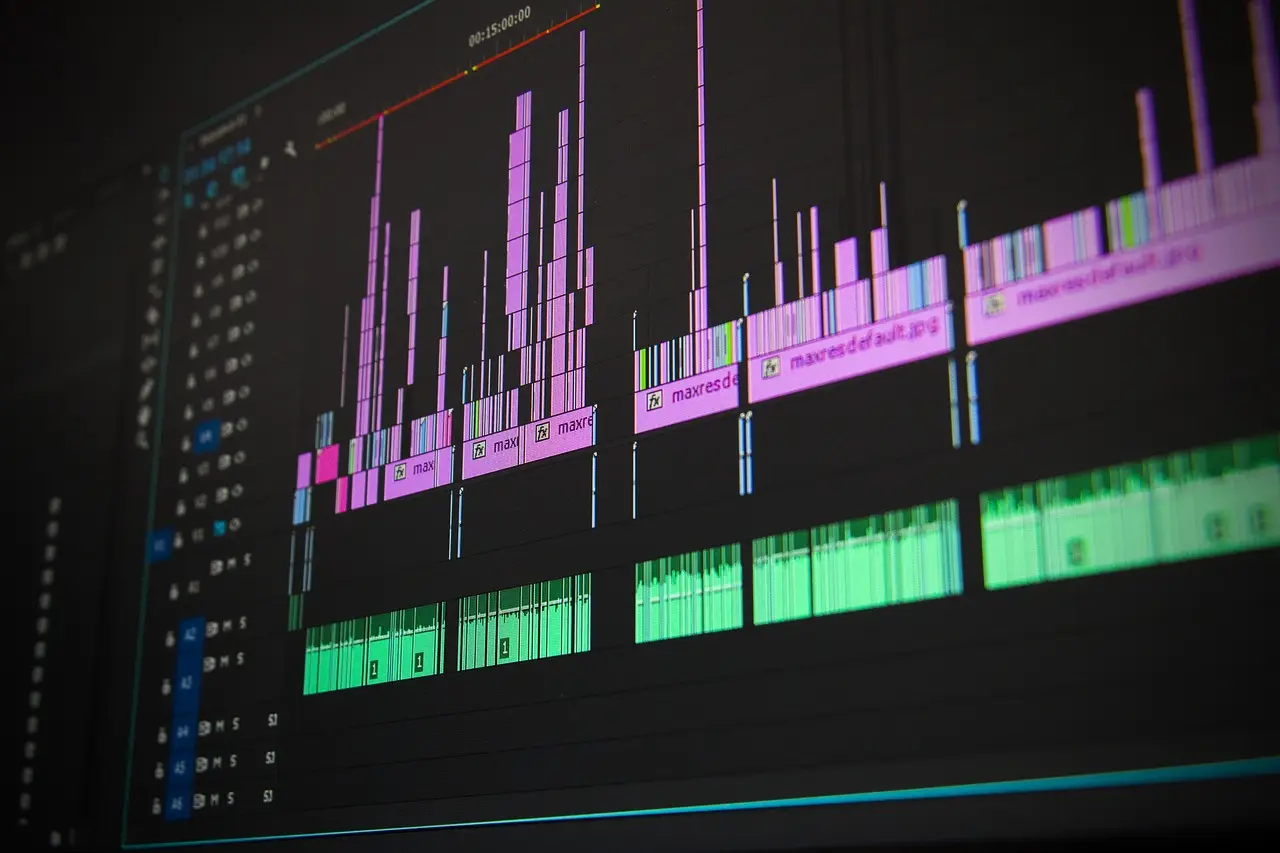
Film editing is the backbone of the whole of post-production – the process in which hours of footage are turned into a story. The editor’s work proceeds in stages:
- assembly and rough cut – the first assembly of scenes according to the script, checking whether the story “works”,
- successive cuts – trimming, rearranging scenes, work on rhythm and emotion, review screenings with the director and producer,
- picture lock – locking the final version of the picture, from which work on sound, colour and effects begins.
Good editing can rescue weaker material, and bad editing can ruin great cinematography. That is why we help match the editor to the character of the project, organise the cutting rooms and keep to the schedule of review screenings, so that notes from commissioners and co-producers go into the right version at the right time.
Colour grading
Colour grading gives the film its final look. The process is divided into two phases: technical colour correction, which balances exposure and white balance between shots from different days and cameras, and creative grading, in which the colourist works with the cinematographer and the director to build the palette and mood of the image. Versions adapted to different display standards are also produced at this stage – from DCP for cinemas, through HDR for streaming platforms, to television versions.
Sound design and the final mix
Sound post-production is much more than cleaning up the dialogue. The full sound process covers:
- dialogue editing and, where necessary, ADR (automated dialogue replacement) when recordings from set need to be re-recorded,
- foley – footsteps, movements and props recorded in the studio,
- sound design – building the acoustic background and sound effects of the film’s world,
- music – original or licensed, together with rights clearance,
- the final mix – combining all the layers into the final soundtrack in the standard required by the distributor, from stereo to immersive formats.
Viewers notice shortcomings in sound immediately, so we plan sound post-production as a stage in its own right, with its own budget and schedule, rather than an item “at the bottom of the list”.
Visual effects (VFX)
VFX is not just about spectacular scenes – in most productions visual effects work unnoticed: cleaning frames of stray elements, extending sets, recreating historical periods, expanding exterior locations or retouching details. An effective VFX pipeline requires planning from pre-production: reference photos on set, properly shot keying shots (green screen), supervision by a VFX supervisor and a realistic schedule for renders and revisions. We organise cooperation with VFX studios and make sure that the cost of effects is controlled from the first breakdown rather than discovered on the final invoice.
Subtitles, language versions and delivery masters
The final step of post-production is preparing the materials for release: subtitles, versions for the deaf and hard of hearing and audio description, translations, and master and delivery copies – DCP for cinemas, mezzanine files for VOD, broadcast versions for television. Every recipient has its own specifications, and quality control (QC) at this stage saves costly rejections of the material by the distributor.
Post-production with Holly Łódź
As an agency that handles productions end to end, we run post-production in connection with the other stages: we budget for it during development, design the workflow before the shoot and supervise the work right up to the hand-over of the delivery masters. The flow of versions, notes and documents is organised by our FPMS system, so the producer knows at any moment what stage the film is at.
FAQ
Frequently asked questions
01What does film post-production involve?
Post-production covers picture editing, colour grading, full sound design with the final mix, visual effects (VFX), subtitles and language versions, and the preparation of delivery masters for cinemas, television and VOD platforms. Quality control and archiving of the materials are also part of this stage.
02How long does film post-production take?
For a feature-length film, post-production usually takes from a few to over a dozen months – depending on the amount of footage, the number of VFX shots and the schedule of review screenings. Shorter forms, such as commercials or music videos, are completed in weeks. A realistic schedule is set at the project budgeting stage.
03How much does film post-production cost?
The cost depends on the running time, the amount of footage, the number and complexity of VFX shots, the sound standard and the number of delivery versions. In production budgets, post-production usually accounts for a significant share of the cost of the whole film – we quote every project individually on the basis of the script and the production approach.
04What is the difference between colour correction and colour grading?
Correction (colour correction) is the technical stage: balancing exposure, contrast and white balance between shots so that the material is consistent. Grading is the creative stage – giving the image its intended palette and mood. In practice both processes are carried out by the colourist as part of a single piece of work on the film.
05Can editing begin before the end of the shoot?
Yes, and it is standard practice: the editor assembles scenes in parallel with principal photography on the basis of the dailies delivered. This makes it possible to spot missing material early and shoot pick-ups while still in production, which is many times cheaper than returning to set after it has wrapped.
Are you finishing your shoot, or planning a project and want post-production planned from the outset? Get in touch – we will prepare the workflow, budget and schedule for post-production and put together a team that will take your film all the way to the delivery master. Write to Holly Łódź.

Contact
Let’s plan the post-production of your film
Tell us about your project – we’ll come back with a proposed scope, schedule and budget.