Filming permits in public spaces – a guide with Łódź as an example
What permits do you need to film on the street, in a park, at a listed building or with a drone? A guide to filming permits – with Łódź as an example.
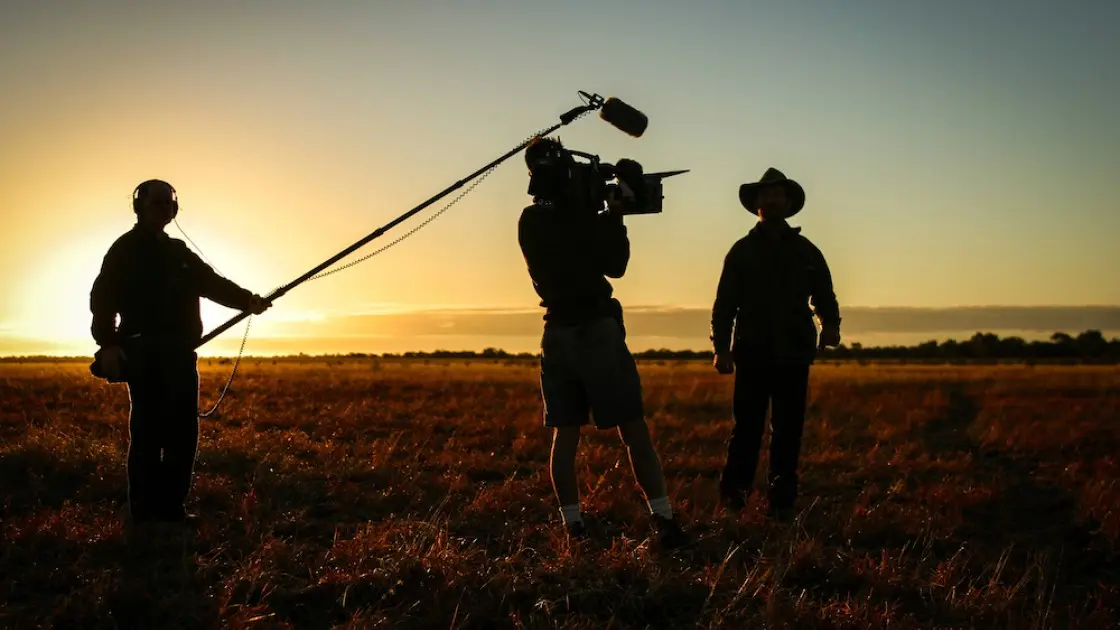
A film set on the street, in a park or in front of a historic tenement house usually requires several consents issued by different institutions – and each has its own procedure and deadline. This guide is for line producers, production managers, unit managers, location managers and producers, including those from abroad, who are planning a shoot in a Polish city. We show who decides what, how much it costs and in what order to handle the formalities. We illustrate the national regulations with the example of Łódź. Legal status and rates: November 2026.
When you need consent and when you do not
Filming in a public place as such does not require a general “filming permit” in Poland. Consents relate to specific interventions: occupying a piece of street or pavement, changing the traffic arrangements, using municipal land, activities at a listed building, flying a drone.
The boundary is well described in the Łódź Film Commission guide: if filming is done handheld on the pavement and does not affect pedestrian or car traffic, the producer does not need a permit from the road authority. But as soon as you set up a tripod with a dolly, a track, lamps or a make-up tent, or reserve spaces for production vehicles, it becomes road occupation – an administrative matter with a decision and a fee.
Private land (a courtyard, an interior, an office building’s forecourt, a shopping centre) is a separate category: there, the agreement with the owner or manager decides. We write more about securing such properties on the property and location hire page.
A map of consents: who decides what
| Situation on set | What you need | Who decides (Łódź example) |
|---|---|---|
| Equipment, set or base on the roadway, pavement or a car park | road occupation permit (decision + fee) | road authority – Zarząd Dróg i Transportu (ZDiT, Roads and Transport Authority) |
| Closing a street, narrowing it, stopping traffic | approved temporary traffic management plan | traffic management authority – Biuro Inżyniera Miasta (City Engineer’s Office) |
| Park, green space | application and agreement with the land manager | Zarząd Zieleni Miejskiej (Municipal Green Space Authority) |
| Square or other municipal property | lease agreement | Wydział Dysponowania Mieniem UMŁ (City Hall Property Department) |
| Tram, bus, depot | consent from the operator | MPK-Łódź (and also ZDiT if the timetable or tracks are affected) |
| Listed building on the heritage register | owner’s consent; if the building is altered – a notification to the conservator | Łódzki Wojewódzki Konserwator Zabytków (Łódź Regional Monuments Conservator) |
| Drone filming | operator registration, competency, third-party liability insurance, flight check-in | Urząd Lotnictwa Cywilnego (Civil Aviation Authority) and Polska Agencja Żeglugi Powietrznej (Polish Air Navigation Services Agency, PANSA) |
| A child under 16 in the cast | permit from a labour inspector | the competent district labour inspectorate |
| Private land | hire or loan agreement | the owner or manager |
In other cities the names of the bodies will differ, but the division of roles is the same, because it follows from statute: the Public Roads Act, the Road Traffic Act, the Act on the Protection of Monuments, the Aviation Law and the Labour Code.
Road occupation – the most common formality
Legal basis and application
Under Article 40 of the Public Roads Act, occupying the road for purposes unrelated to the road requires a permit from the road authority, issued as an administrative decision. The road (pas drogowy) is not just the roadway – it also includes the pavement, the verge, lay-bys and roadside parking. A film set is treated as occupation “on an exclusive basis”.
The application states the applicant, the purpose, the location, the area and the period of occupation. It is accompanied by a site plan at a scale of 1:500 or 1:1000 and, if the occupation affects traffic, an approved traffic management plan. In Łódź the application is submitted to ZDiT (ul. Tuwima 36) in person, by post or via ePUAP; there are separate forms for public and internal roads. When an agent acts on the producer’s behalf, a power of attorney with stamp duty of PLN 17 is required.
How much it costs
The fee is calculated using a simple formula: area in m² × daily rate × number of days. Occupation shorter than 24 hours counts as a full day. Rates are set by resolutions of municipal and district councils and regional assemblies, and the statutory maximum is PLN 10 per m² per day.
In Łódź, the City Council resolution of 16 September 2026 (No. XXXV/1051/26) keeps a preferential rate for “a film set together with technical facilities”: PLN 1.20 per m² per day. By comparison, other exclusive occupations there cost PLN 5. A worked example: a set and base with a combined area of 300 m² for two days comes to 300 × PLN 1.20 × 2 = PLN 720 in fees. On top of that come costs that are usually higher than the fee itself: the traffic management plan, signage, securing the area.
What not to do
Occupying the road without a permit, beyond the permitted period or over a larger area than stated in the decision means a penalty of ten times the fee. Space for the base and technical vehicles must be included in the application: the Łódź ZDiT makes clear that it does not agree to “reserving” land for the base the day before the shoot, and in the paid parking zone the charges also apply to the production.
Traffic management and stopping traffic
If the set requires closing a street, narrowing the roadway or short stoppages for the duration of a shot, you need a temporary traffic management plan approved by the traffic management authority. In cities with district status this is the mayor; in Łódź these matters are handled by the City Engineer’s Office. The order matters: first approval of the plan, then the road occupation application with the plan attached. For roads of higher categories the plan is also reviewed by the police, and filming on Piotrkowska Street additionally requires approval from the street’s manager for the specific day and hours.
It is worth commissioning the plan from a specialist company that will also put up and take down the signage. Two things that are easy to forget:
- the traffic management authority, the road authority and the competent police commander must be notified of the date on which the temporary traffic arrangements come into force at least 7 days in advance,
- the film crew has no authority to direct traffic. Only persons designated in the Road Traffic Act may stop vehicles; who will do this on set is settled at the planning stage, not on the morning of the shoot.
Parks, squares, municipal buildings and public transport
Green spaces and squares are not part of the road, so instead of an administrative decision you conclude an agreement with the body that manages them. In Łódź an application to film in a park is submitted to the Municipal Green Space Authority no later than 30 days before the shoot, and the fee for professional productions is PLN 211.34 + VAT per day; driving vehicles into a park requires separate consent. Squares are made available by the City Hall Property Department under a lease agreement (the same daily rate), municipal premises by Zarząd Lokali Miejskich (Municipal Premises Authority). We quote these amounts from the Łódź Film Commission guide for 2026; it is worth confirming them before budgeting.
Filming on a tram, bus or in a depot is agreed with the operator. When a scene affects the timetable, the tracks or the overhead lines, the road authority joins the conversation. If vehicles are to appear in a scene – from a police car to a period bus – see also vehicle and special vehicle hire.
Listed buildings: owner’s consent and notification to the conservator
Filming a listed building from the street does not require the conservator’s consent. It is different when the production mounts something on the building, changes its appearance or uses it in an unusual way. New rules have applied here since 3 June 2026: instead of the previous permit, some activities at a building entered in the heritage register require a notification to the regional monuments conservator (Article 36aa of the Act on the Protection and Care of Monuments). This covers, among other things, placing technical equipment, signs and inscriptions on a listed building and other activities that could damage its fabric or change its appearance.
The conservator has 60 days to raise an objection; they may also issue a certificate earlier stating that there are no grounds for objection, which allows work to start sooner. The Act does not mention filming explicitly, so the scope of intervention – fixing lighting to a façade, changing shop signs, replacing joinery “to match the period” – must be discussed with the conservation office before the art department’s work goes into the schedule. Older guides that still describe the permit procedure with stamp duty are out of date in this respect. Regardless of the conservator, the owner’s consent is always required.
A drone on set
Most aerial shots can be done in the open category: a drone up to 25 kg, flying within visual line of sight, up to 120 m above ground, keeping the distances from uninvolved persons appropriate to subcategory A1, A2 or A3. From the line producer’s point of view, what matters is the list of things to check with the operator:
- operator registration and the number displayed on the drone,
- pilot competency appropriate to the flight subcategory,
- third-party liability insurance – since 13 November 2025 mandatory for operators of drones with a take-off mass of 0.25 to 20 kg, with a minimum sum insured of 50,000 SDR; the policy must be in force no later than the day before the flight,
- flight check-in in the DroneTower app of the Polish Air Navigation Services Agency,
- geographical zones at the filming location: in an airport’s control zone (which covers, among other areas, a large part of Łódź) the permitted flight altitude and drone mass depend on the distance from the airport, and closer than one kilometre from its boundary every flight requires a mission notification and the consent of air traffic services.
Flights over gatherings, at night, with heavy equipment or beyond visual line of sight are subject to additional requirements or fall into the specific category. It is also worth knowing that mandatory third-party liability insurance does not cover damage caused during a flight carried out in breach of the regulations – another reason to check the drone formalities as carefully as production insurance.
People and buildings in the frame
A permit to occupy a street does not settle the rights of people and works visible in the frame. Three rules from the Act on Copyright and Related Rights:
- disseminating a person’s image requires the consent of the person depicted (Article 81(1)); consent is not needed when the person has received the agreed payment for posing – which does not exempt you from signing a contract with an extra,
- consent is not required when the person is merely a detail of a whole, such as a gathering, a landscape or a public event (Article 81(2)(2)). A passer-by in the background of a wide shot is something different from a passer-by on whom the camera lingers,
- buildings, monuments and murals permanently displayed on publicly accessible roads, streets, squares or in gardens may be shown, “but not for the same use” (Article 33(1)).
In advertising, where images and other people’s creative work serve a brand, the safety margin is smaller than in a feature or documentary. Doubtful cases are best discussed with a lawyer before the shoot – our legal services for productions can help with that.
Children on set
The participation of a child under the age of 16 in a film or commercial requires – in addition to the consent of the legal guardian – a permit from a labour inspector (Article 304⁵ of the Labour Code). The permit is applied for by the entity for which the child is to work, i.e. the producer. The application must be accompanied by, among other things, the written consent of the parent or guardian, an opinion from a psychological and educational counselling centre, a medical certificate and, in the case of a pupil, an opinion from the head teacher. In the permit the inspector specifies, among other things, the type of activity, the permitted period and the child’s daily working hours, so the schedule of scenes with young actors must be fitted to the decision, not the other way round. Collecting the opinions takes time – it is a formality to set in motion as soon as the role is cast.
Uniforms, police cars, quiet hours
A few smaller matters that come up regularly on city shoots:
- uniform costumes and marked emergency service vehicles are permissible in the frame, but off set – on the way to the location, during a break – they may give rise to liability under the Code of Petty Offences; flashing lights and vehicle markings are best covered during journeys,
- the participation of real police officers or police equipment requires the consent of the competent commander,
- night shoots in residential areas should be preceded by information for residents; disturbing the peace at night is an offence regardless of any permits held,
- scenes with weapons or pyrotechnics, or on railway and military land, are subject to separate, detailed requirements – these are agreed each time with the land manager and a specialist contractor.
Timetable of formalities – a checklist
The deadlines below are a sensible work plan, not a statutory requirement (except for items marked as a regulation or rule).
- Immediately after choosing the location: identifying the owners and managers of the land, the road category, listed status, drone zones; contact with the local film commission.
- 6–8 weeks before the shoot: commissioning the temporary traffic management plan; a conversation with the monuments conservator if the art department’s work touches a registered building (objection period: 60 days – regulation); application to the labour inspector for children in the cast.
- At least 30 days before: application to film in a park (a requirement of the Łódź Municipal Green Space Authority); road occupation application with the approved plan (decision issued within up to a month – regulation).
- 2–3 weeks before: agreements with owners of private land, arrangements with the transport operator, confirmation of the drone operator’s competency and liability policy.
- At least 7 days before: notification of the date the temporary traffic arrangements come into force (regulation); information for residents and premises on the street.
- The day before and on the shooting day: the full set of decisions and agreements in the unit manager’s folder, signage set up in line with the plan, drone flight check-in.
- After the shoot: restoring the permanent traffic arrangements, a formal handover of the land, paying the road occupation fee by the deadline stated in the decision.
We describe how the formalities fit into the overall preparation plan in the guide how to organise a film shoot.
Łódź Film Commission – the first point of contact for productions
Łódź Film Commission has operated since 2009 within “EC1 Łódź – City of Culture” and is the oldest film commission in Poland. It helps with location scouting and contacts with municipal bodies, including obtaining permits. Support is free of charge until the decision to shoot in Łódź is taken; after that the commission charges a one-off flat fee of PLN 500 + VAT for the entire shooting period (as of November 2026). The commission does not replace the producer, however: the production submits the applications and is responsible for their content. We write about the properties and exteriors themselves in the guide film locations in Łódź.
What next
City formalities are rarely difficult, but they are almost always time-consuming and interdependent. If you are planning a shoot in Łódź or the region, start with a list of locations with dates and the scope of intervention at each – on that basis you can draw up a realistic calendar of applications.
At Holly Łódź we handle this as part of production management and the production office: we prepare the applications and coordinate the traffic management plan, location agreements and securing the set. Write to us – tell us the city, the dates and the exterior scenes, and we will reply with the consents you will need and how much time to set aside for them.
This article is for information only and does not replace legal advice. Local rates and procedures change – confirm them with the competent office before submitting an application.
Sources
- Act of 21 March 1985 on Public Roads (ustawa o drogach publicznych), Article 40; Regulation of the Council of Ministers of 1 June 2004 on the conditions for granting road occupation permits
- Resolution No. XXXV/1051/26 of Łódź City Council of 16 September 2026 on road occupation fee rates (Official Journal of the Łódź Region 2026, item 6824)
- Regulation of the Minister of Infrastructure of 23 September 2003 on detailed conditions for traffic management on roads
- Act of 23 July 2003 on the Protection and Care of Monuments (ustawa o ochronie zabytków i opiece nad zabytkami), Article 36aa
- Regulation of the Minister of Finance and Economy of 24 October 2025 on mandatory third-party liability insurance for operators of unmanned aircraft systems (Journal of Laws 2025, item 1485)
- Polish Air Navigation Services Agency – DroneTower and geographical zones: https://www.pansa.pl/dronetower/
- Act of 4 February 1994 on Copyright and Related Rights (ustawa o prawie autorskim i prawach pokrewnych), Articles 33 and 81; Labour Code, Article 304⁵
- Łódź Film Commission – services and the “Scout w Łodzi 2026” guide: https://ec1lodz.pl/lodz-film-commission/uslugi-lfc
FAQ
Frequently asked questions
01Do you need a permit for every street shoot?
No. If you are shooting handheld on the pavement, without setting up equipment and without affecting pedestrian or vehicle traffic, a permit from the road authority is not required – this is how the Łódź Film Commission guide, among others, describes it. A permit is necessary when the set, equipment, base or production vehicles occupy part of the road exclusively.
02How much does road occupation for a film set cost?
The fee is the occupied area multiplied by the daily rate and the number of days. The rate is set by a resolution of the local authority, and the statutory maximum is PLN 10 per m² per day. In Łódź the rate for a film set with technical facilities is PLN 1.20 per m² per day (as of November 2026).
03How far in advance must applications be submitted?
The regulations do not set a minimum notice period for a road occupation application, but the road authority has up to a month to issue a decision, and a temporary traffic management plan must be approved beforehand. In practice it is worth starting the formalities for a street shoot at least several weeks before the planned shooting day. An application to film in a Łódź park must be submitted no later than 30 days before the shoot.
04Can a film crew stop traffic for the duration of a shot?
Not on its own initiative. Stopping or changing traffic requires an approved temporary traffic management plan, and only persons authorised under the Road Traffic Act may direct traffic. Neither the unit manager nor assistants have the right to stop vehicles.
05Do you need a separate permit for drone filming?
For typical flights in the open category it is not a matter of a permit but of meeting the conditions: operator registration, pilot competency, mandatory third-party liability insurance, a flight check-in in the DroneTower app and checking the geographical zones. Additional consents are needed near an airport and for flights outside the open category.