How much does it cost to make a film in Poland? The budget step by step
How much does it cost to make a film in Poland? What a budget consists of, what drives the cost of a shooting day and how funding can lower your spend.

Making a film in Poland can cost anything from a few tens of thousands of złoty for a short student film to tens of millions for an ambitious feature – and there is no single honest price list you could print out and pin on the wall. Every project is priced individually, on the basis of the script, the number of shooting days, the cast and the creative ambitions – and this article shows what such a budget really consists of and what to look out for before you sign your first contract.
We write this as practitioners: at Holly Łódź we budget and account for film, series and commercial productions every day, so instead of round figures from the internet you will find here the cost map that a real production department works with.
What a film production budget consists of
A film budget is not a single number but a tree of several hundred lines grouped into sections. In Polish practice it most often looks like this:
Development and pre-production
Before the camera rolls, the following are produced: the script and its successive drafts, location scouting, casting, storyboards, the budget and the shooting schedule. Development is often underestimated, yet this is exactly where the decisions that later cost the most are made – a badly calculated pre-production period can take its revenge on every shooting day.
Production department and production office
The line producer, unit managers, coordinators, the production office, production accounting and legal support for contracts. This is the film’s “nervous system”: the department that spends the money of all the other departments and makes sure they spend it in line with the budget. On larger productions there is also reporting to co-producers and funds.
Cast
Fees for lead and supporting actors, bit parts, extras, plus agencies, costume fittings, transport and hotels for the cast. The range is enormous – from day rates for extras to star contracts negotiated individually. In advertising there are also image rights buyouts, which can exceed the fee for the shooting day itself.
Shooting crew
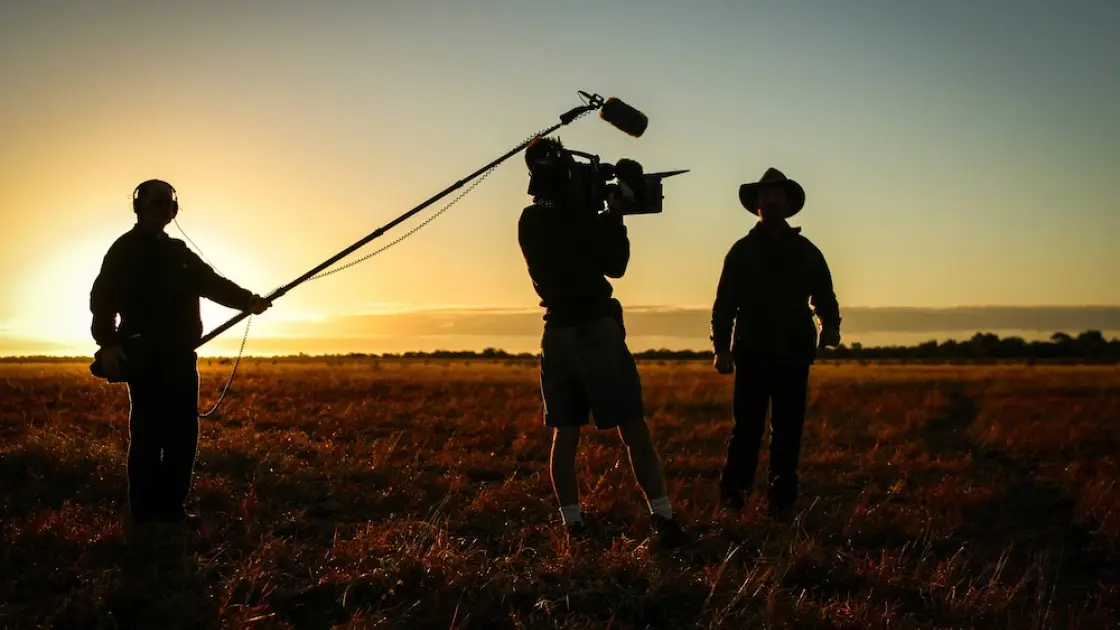
The directing, camera, lighting, sound, art, costume, make-up and grip departments, plus pyrotechnics and stunts if the script requires them. Crew costs are calculated as day or weekly rates multiplied by the number of days – which is why every additional shooting day raises the budget in a step, not a straight line.
Camera and lighting equipment
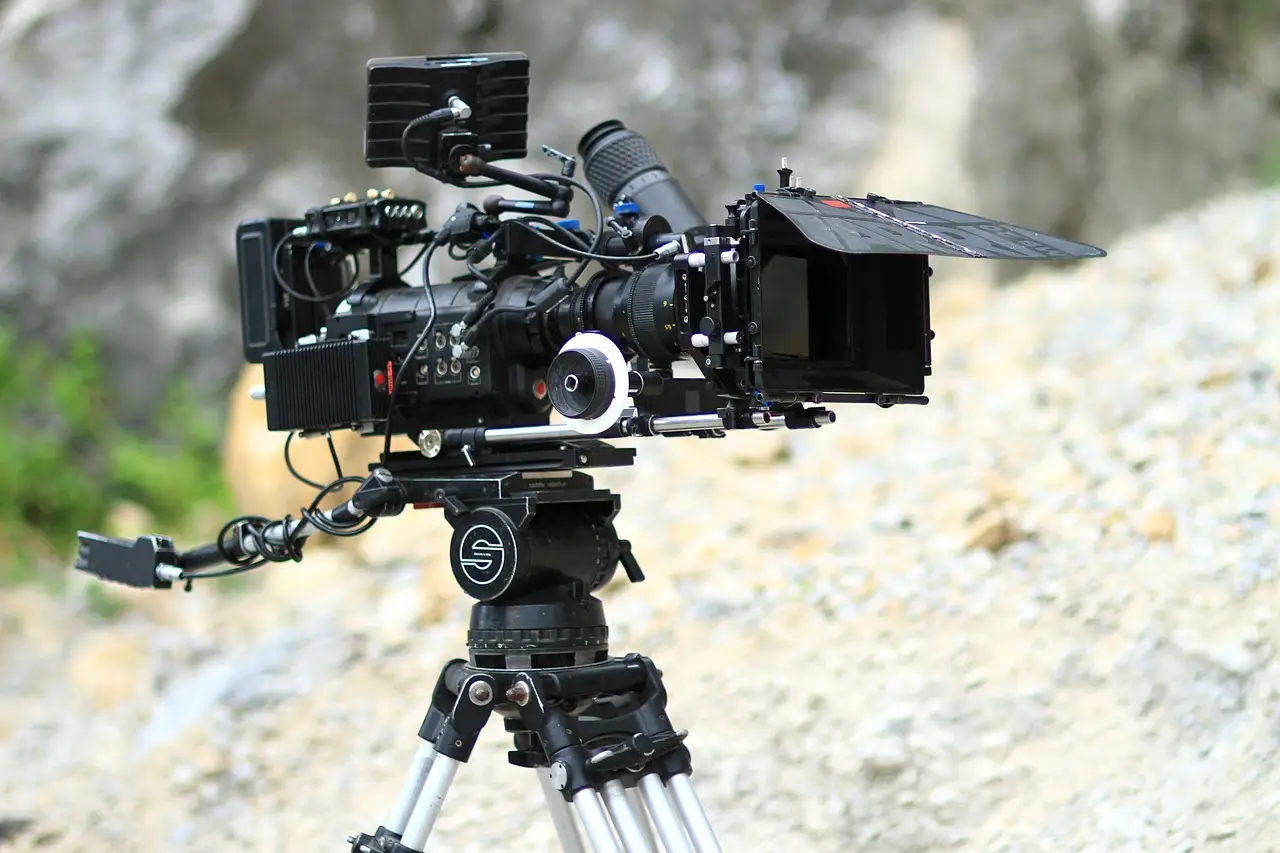
Cameras, lenses, lighting, generators, cranes, dollies, stabilisers, video playback. Equipment is almost always hired, not bought – hire packages are negotiated for a specific period of principal photography. Well-planned equipment hire is one of the lines where professional organisation genuinely saves money: equipment standing idle on location is money thrown away.
Locations and filming venues
Fees for hiring interiors and exteriors, permits, road occupation, deposits, restoring properties to their original condition, film studios and set construction. We write more about working with locations in our article on film locations in Łódź.
Transport, logistics and unit base
Production vehicles, camera and lighting trucks, actors’ trailers, crew minibuses, fuel, parking and – for shoots away from base – hotels and per diems. On top of that, set facilities: tents, toilets, heating or air conditioning, security.
Catering and set supplies
Feeding the crew and cast is a cost calculated per person per day – with a crew of several dozen people and several dozen shooting days, it becomes a serious line. A hungry crew works worse and more slowly, so saving here is a false economy.
Post-production
Picture editing, sound post-production, music (including rights to tracks), colour grading, VFX, subtitles, broadcast versions and deliverables. On effects-heavy projects post-production can make up a significant part of the whole budget.
Insurance, rights and overheads
Production and equipment insurance, third-party liability, personal accident insurance for the crew and, on larger projects, insurance against production interruption. Plus licences, copyright, banking and administrative costs.
Contingency
The standard is a contingency of a few to around fifteen per cent of the budget for the unforeseen: weather, an actor falling ill, equipment failure, an extra shooting day. A budget without a contingency is not a budget but a wish list.
The scale of the project changes everything
The same cost structure looks completely different depending on the format:
- Student film / short – budgets from symbolic sums to several tens or hundreds of thousands of złoty; a lot of goodwill work, school equipment or equipment hired on preferential terms, a small crew.
- Commercial – a short but very intensive cycle: often 1–3 shooting days with daily costs comparable to a large feature, because production standards are high and time is short. Budgets from a few tens of thousands to several million złoty, depending on the scale of the campaign.
- Theatrical feature – several dozen shooting days, full departments, budgets usually counted in millions and, for large spectacles, in tens of millions of złoty.
- Series – the logic of a “production line”: the cost per episode falls thanks to economies of scale (sets built once, a permanent crew), but the total budget of a season is often bigger than that of many a theatrical film.
Let us repeat: these are broad descriptive ranges, not a price list. Two films of identical length can differ in cost several times over.
What costs really depend on
A few variables drive the budget harder than all the others put together:
- The number of shooting days – the most expensive unit in filmmaking. Each day is the sum of the rates of the whole crew, equipment, locations and logistics.
- The number and nature of locations – the more company moves, the more time and money is lost on transport and setting up the set.
- Cast – well-known names raise costs, but they are often a condition of financing and sales.
- Special scenes – night, water, children, animals, pyrotechnics, stunts, shooting from vehicles: each of these multiplies costs and health and safety requirements.
- Shooting period and season – winter, holidays and the industry’s high season mean higher rates and less availability of people and equipment.
- The experience of the production department – paradoxically, a good, properly paid production team lowers the overall budget, because it eliminates downtime and double spending.
How a film is budgeted: the budget and cash flow
Professional budgeting starts with a script breakdown: scene by scene, you list the cast, locations, props, effects and equipment needs. On this basis the shooting schedule is drawn up, and only from the schedule – the budget. The order is not accidental: without knowing how many days we will shoot and in which locations, every estimate is guesswork.
The second document, just as important as the budget, is the cash flow – the plan of money coming in and going out. A production can have its budget closed and still grind to a halt because an instalment from a co-producer arrives a month after the crew’s payment date. That is why you control not only “how much we will spend” but also “when we will spend it and when the money will come in”.
During the shoot the budget is alive: planned spend is compared with actual spend every day (the cost report), and you react before a variance grows. At Holly Łódź we use our own FPMS system for day-to-day budget control; it brings the budget, accounting documents and cost reports together in one place – the producer sees the state of the budget in real time, not after the month has been closed.
How to lower production costs legally
The good news: Poland has several real mechanisms for financing and recovering costs.
- PISF funding – the Polish Film Institute (Polski Instytut Sztuki Filmowej, PISF) funds the development, production and promotion of films under its operational programmes (pisf.pl).
- Audiovisual incentives – the 30% cash rebate – productions that meet the statutory conditions (including a cultural test and minimum levels of Polish spend) can recover 30% of qualifying costs incurred in Poland. Details and calls for applications are run by PISF (pisf.pl/zachety). It is a mechanism that genuinely changes the economics of a project – also for foreign productions shooting in Poland.
- Regional film funds – many regions and cities co-finance productions made on their territory; in our region there is the Łódzki Fundusz Filmowy (Łódź Film Fund). The condition is usually spending part of the budget locally – which happens naturally anyway when you shoot on the spot.
- Co-productions and partners – sharing costs between domestic and foreign co-producers, in-kind contributions (equipment, post-production services).
- Smart organisation – consolidating locations, a realistic schedule, negotiated equipment and vehicle hire packages, scheduling the shoot outside peak season. These are not tricks, just production craft.
What not to do: do not save on insurance, health and safety, contracts or the contingency. Each of these “savings” tends to come back with interest.
The role of the line producer: guardian of the budget
The line producer is the person who turns the director’s vision into a workable plan and makes sure that plan fits within the money. They build the budget, negotiate rates, approve expenditure, manage cash flow and settle the daily conflicts between “we want” and “we can afford”. A good line producer is not a brake – they are the one who finds a way for an ambitious scene to be made for realistic money.
If you are planning a production and need an experienced production team, see how we work: production management at Holly Łódź.
Planning a film, series or commercial and want to know how much it will really cost? We will prepare a budget, a shooting schedule and a financing plan for you – with a full production department and day-to-day budget control in our FPMS system. Write to Holly Łódź – let’s talk about your project before the spending starts.
FAQ
Frequently asked questions
01How much does it cost to make a feature film in Poland?
The range is very wide: from independent productions costing a few hundred thousand złoty to spectacles costing tens of millions. The cost is driven above all by the number of shooting days, the cast, the locations and the scale of post-production – which is why every project is priced individually on the basis of the script.
02How much does a shooting day cost?
A shooting day is the sum of crew rates, equipment hire, locations, transport and catering – from a dozen or so thousand złoty for a small-format project to hundreds of thousands for a large feature or a commercial with elaborate staging. Only a budget built on the shooting schedule gives you a concrete figure.
03What is the 30% cash rebate and who can use it?
It is a rebate of 30% of qualifying costs incurred in Poland, paid by the Polish Film Institute (PISF) to film and series productions that meet the statutory conditions – including a cultural test and minimum spending thresholds. It is used both by Polish productions and by foreign productions shooting in Poland.
04What share of the budget goes on post-production?
That depends on the project: in an intimate drama post-production is often a relatively small line, while in a film with extensive VFX it can make up a significant part of the total. That is why post-production is planned and priced at the budgeting stage, not after the shoot has wrapped.
05Can you make a film without a contingency?
You can – until the first spell of bad weather or the first actor falls ill. A contingency of a few to around fifteen per cent is the industry standard and a condition set by most funds and insurers. Treat it as the cost of keeping the project safe, not as “spare money to spend”.