Script security and AI in film production – what to look out for
How to protect script confidentiality when working with AI: the real risks, FilmProduct (FPMS) declarations and questions to ask a provider before uploading.

Before release, a script is one of a production company’s most valuable and most confidential documents. It circulates between the producer, the director, the cast, the heads of department and investors – usually with confidentiality clauses in the contracts. When AI tools appear in pre-production, a new question arises: what happens to the text once it has been uploaded? In this article we sort out the real risks (without scaremongering), present the FilmProduct (FPMS) declarations and provide a list of questions worth asking the provider of any AI tool.
Which risks are real
Most concerns about AI in production boil down to a few specific questions that apply to any cloud software, not just AI:
- data retention – whether the provider stores the submitted text, for how long and for what purpose,
- model training – whether users’ content may be used to improve models; in some publicly available services this depends on account settings and the terms of service, so it has to be checked, not assumed,
- data location – on which servers and in which jurisdiction projects are stored,
- access – who on the production side and on the provider’s side can see the script, the budget or cast data,
- personal data – budgets and cast and crew lists contain names, contact details and sometimes rates,
- leaving the service – whether the data can be exported and whether it is deleted afterwards.
In practice, the biggest risk is often not the tool itself but a disorganised way of working: a script pasted into random apps on private accounts, files emailed around in successive versions, access for people who left the project long ago. One agreed tool with access control can be safer than several informal ones. The same principles apply to working with partners – for example in production services, where a foreign production’s script goes to a local team.
The legal framework in brief
Two pieces of EU law are referred to most often here. We describe them in general terms – in a specific case it is worth consulting a lawyer (see legal services).
GDPR. The script itself is usually not a set of personal data, but production documents often are: cast and crew lists, contact details, rates. If the system provider processes such data on behalf of the production company, the GDPR requires a data processing agreement (Article 28). Such an agreement sets out, among other things, the scope and purpose of processing, security measures, the rules on using subprocessors (e.g. a cloud or AI model provider), assistance in fulfilling the rights of data subjects, and the return or deletion of data at the end of the cooperation. Responsibility for choosing the provider remains with the controller, i.e. the production.
AI Act. The EU regulation on artificial intelligence comes into force in stages, and the obligations depend on the role (provider, deployer) and the risk category of the system. The timetable for some of the obligations was changed in 2026 as part of an EU simplification package, so when assessing a tool it is worth checking the current state of the law rather than relying on older summaries. For a producer using a script analysis tool, the most important issues remain the contractual and data-related ones described below.
What FilmProduct declares
FilmProduct communicates its approach to security with the slogan “Your screenplay stays yours”. According to the product documentation:
| Area | The system maker’s declaration |
|---|---|
| Data location | production data stored on servers in Poland, in the European Economic Area |
| AI processing | Gemini API in zero-retention mode – the script is not stored by the AI service |
| Model training | scripts are not used to train AI models |
| Standards | security designed in line with ISO/IEC 27001 good practice; privacy & security by design principles, taking into account the GDPR, the AI Act and European cybersecurity standards |
| End of subscription | project data can be exported for 30 days, then deleted from the active environment |
| Enterprise version | security and data processing tailored to the contract, optionally dedicated infrastructure |
Note the precise wording: “ISO/IEC 27001 good practice” is a statement about how the system is designed, not information about a certificate. This is normal for a young product – what matters is that the producer knows exactly what they are getting and has it written into the contract.
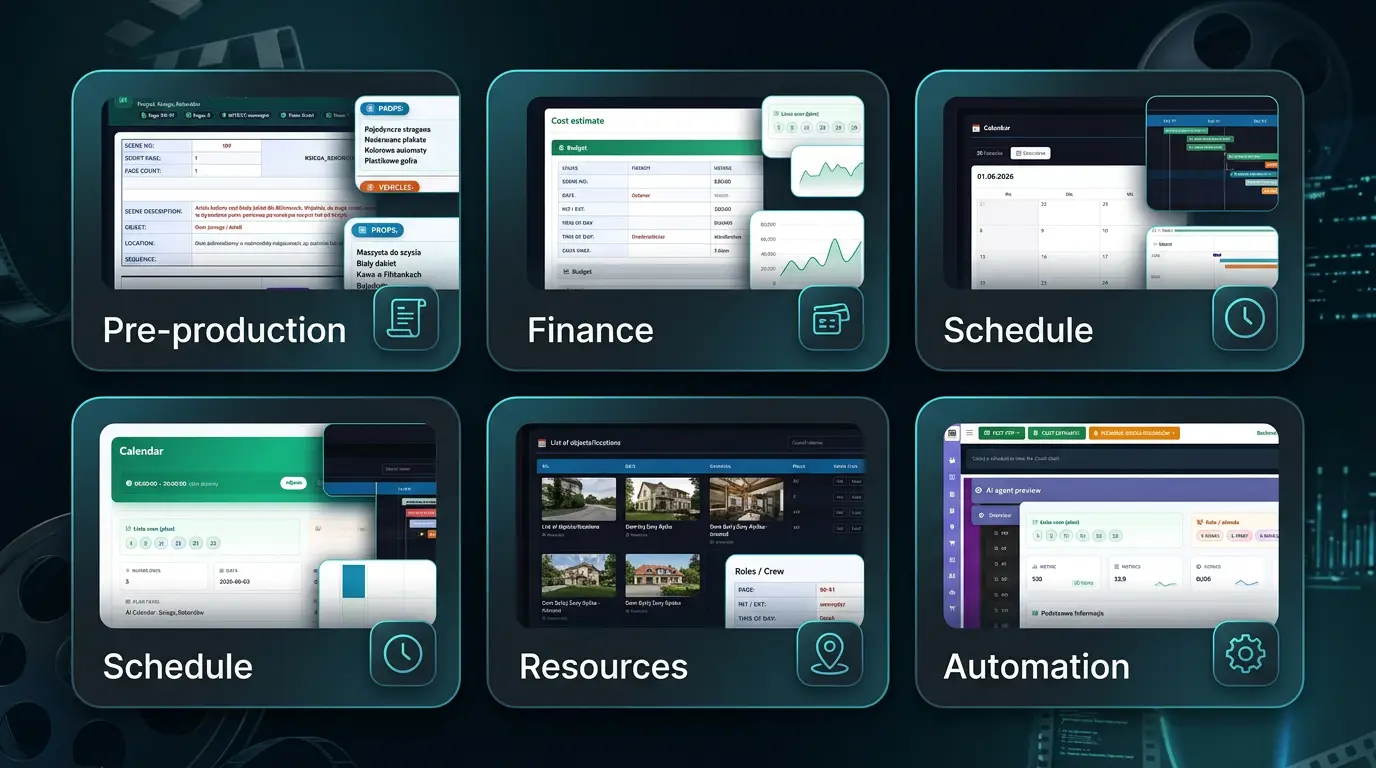
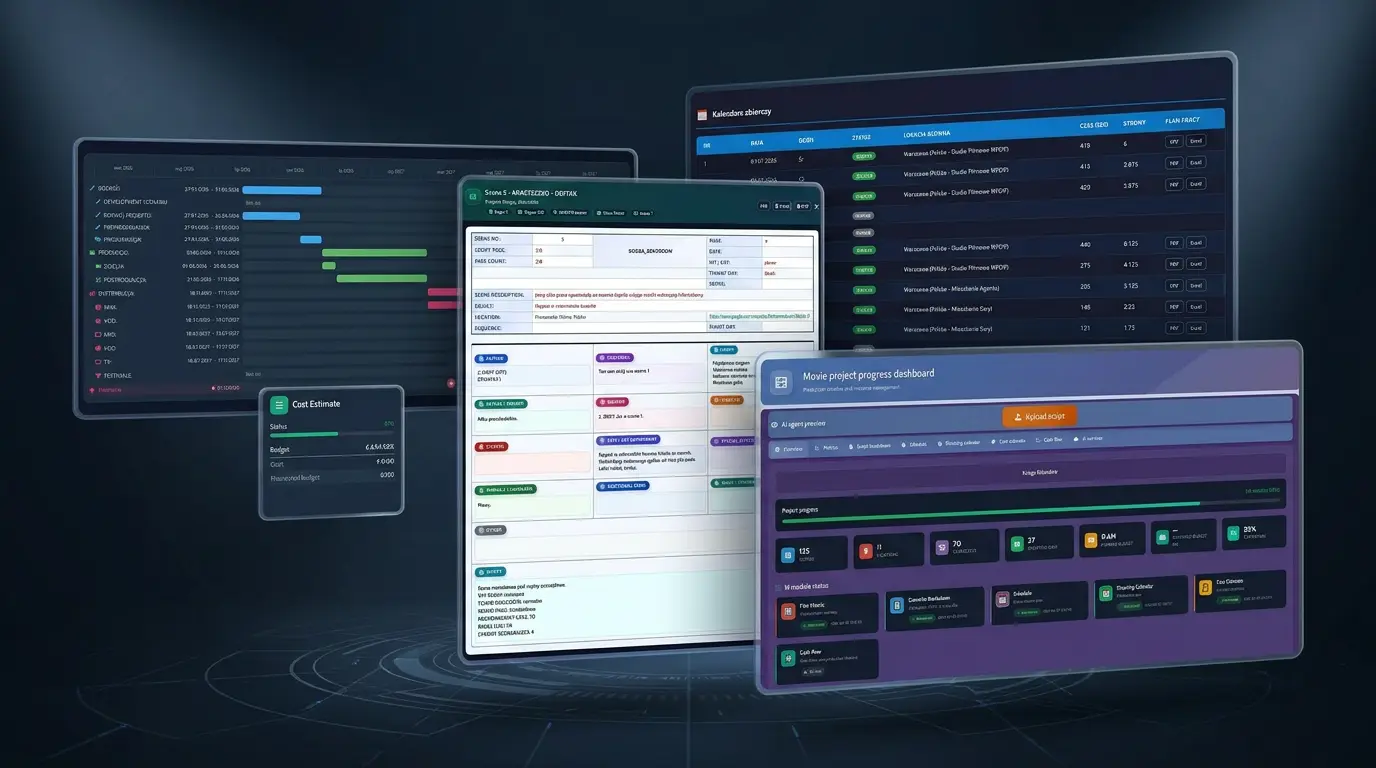
The second pillar of security is human control over the result: every scene card, set card, schedule item and budget line is editable, and the documents are generated from the team’s corrections. More on this in our article on AI script analysis.
Checklist: questions for the AI tool provider
The questions below fit any system to which you want to entrust a script or production data – including FilmProduct.
- Data processing agreement (DPA) – does the provider sign one, and does it list subprocessors, including the AI model provider?
- Data location – where are projects physically stored, and does data leave the EEA?
- Retention – does the AI service store the submitted text, and if so, for how long?
- Training – does the contract explicitly rule out using the script to train models?
- Permissions – can you assign roles and restrict access to the budget or cast data to selected people?
- Revoking access – how quickly can you remove access for someone who leaves the project?
- Export – in what formats can you export data and documents, so as not to become dependent on a single tool?
- Data deletion – what happens to the project after the contract ends, and within what time frame?
- Incidents – how does the provider report security breaches, and to whom?
- Human verification – can all AI results be checked and corrected before use?
On the production side, it is worth adding three rules: one agreed tool instead of private accounts, a designated person responsible for access to the project, and a clause on AI tools in contracts with the crew and collaborators, if working with them is part of the process.
How FilmProduct answers this list
FilmProduct is a product of Hollyłódź sp. z o.o. – the same company that runs Holly Łódź – so below we are describing our own tool. The answers come from the documents published in the footer of filmproduct.com: “GDPR and Data Processing Agreement (DPA)” and “Security and AI Transparency” (version 1.0, in force from 1 September 2026). Before uploading a script, read the current versions of these documents – it is they, not this article, that bind the parties.
| Question from the list | What the FilmProduct documents declare |
|---|---|
| Data processing agreement (DPA) | A DPA within the meaning of Article 28 GDPR is concluded electronically together with the agreement for use of the service; a separately signed DPA takes precedence. For the data of people involved in the project (cast, crew, contractors), the client is the controller and FilmProduct is the processor. |
| Subprocessors | The list of subprocessors is an annex to the DPA: Google Cloud Poland sp. z o.o. and approved Google subprocessors (hosting, infrastructure, Gemini Developer API). The client is to be informed of the addition or change of a subprocessor at least 15 days in advance and may object. |
| Data location | Persistent storage of application data – in the Google Cloud region in Warsaw (EEA). Any transfers outside the EEA require a basis under Chapter V of the GDPR, e.g. standard contractual clauses. |
| Retention in the AI service | The project uses the paid Gemini Developer API with approved Zero Data Retention mode; the document describes possible caching only in RAM for up to 24 hours and the disabling of features that would persist content. |
| Model training | According to Google’s documents, in this configuration Google does not use prompts or responses to improve its products, and FilmProduct does not use scripts for its own production, advertising or sale. |
| Permissions | Role-based access control and the principle of least privilege; multi-factor authentication for administrative access. |
| Export and deletion | Standard export during the contract and for 30 days after the subscription ends; deletion from active systems no later than after 60 days, expiry of backups no later than after 90 days. |
| Incidents | The processor notifies the client of a breach concerning the entrusted data without undue delay; security issues are reported to contact@filmproduct.com with the subject “SECURITY”. |
| Human verification | The documents stress that AI results may be wrong and need to be checked; AI does not replace the producer or the production manager. |
Two things remain on the production side: the decision about what data goes into the project in the first place (the documents recommend not uploading data that is not needed), and the controller’s obligations towards the cast and crew – the legal basis and the information on processing.
Safe work with AI at Holly Łódź
Holly Łódź implements the FilmProduct system and uses it in its production services – from development to production management. During implementation, we help establish who on the crew has access to the project and who verifies the results of the analysis. If you would like to talk about how to introduce an AI tool into your production safely, get in touch with us. You will find a description of the safeguards and the option to book a demo of the system at filmproduct.com.
A full overview of the system is in the guide FilmProduct (FPMS) – a film production management system, and how the shooting schedule and the budget are built from the same data is covered in the article shooting schedule and budget from one script.
FAQ
Frequently asked questions
01Is it safe to upload a script to an AI tool?
That depends on the tool and the terms on which it processes data. Before uploading the text, it is worth checking where the data is stored, whether the provider retains the submitted content, whether it uses it to train models, who has access to the project and how the data can be exported and deleted. The answers should come from the contract, not just from marketing materials.
02What does FilmProduct declare regarding security?
The system’s maker declares that production data is stored on servers in Poland, in the European Economic Area, that AI processing runs through the Gemini API in zero-retention mode, that models are not trained on scripts, and that security is designed in line with ISO/IEC 27001 good practice, taking the GDPR and the AI Act into account.
03Is a data processing agreement needed for an AI tool?
If the provider processes personal data on your behalf – for example cast and crew lists with contact details – the GDPR requires a data processing agreement (Article 28). It sets out, among other things, the scope and purpose of processing, security measures, the rules on using subprocessors and the return or deletion of data at the end of the cooperation.
04What happens to the data after cancelling FilmProduct?
According to the documentation, project data can still be exported for 30 days after the subscription ends, after which it is deleted from the active environment. The details are worth confirming in the contract with the provider.