Top 10 Polish film directors of 2024
Polish film directors of 2024: Eagles and Golden Lions for “Zielona granica”, success for “Kos”, “Biała odwaga” in Gdynia and record audiences for “Kleks”.

In 2024 Polish cinema reaped the rewards of the previous season – “Zielona granica” (Green Border) and “Kos” (Scarborn) triumphed at the Eagles – while Gdynia presented strong new titles, from “Biała odwaga” (White Courage) to “Pod wulkanem” (Under the Volcano). Cinemas also got the biggest box-office hit of recent years. Here are the ten directors, women and men, who left the strongest mark on the year.
How the ranking was compiled. This is an editorial selection, not the result of a vote. We took into account the Polish Film Awards “Eagles” (Orły) presented in March 2024, the awards of the 49th Gdynia Polish Film Festival (the Golden Lions and individual awards), presence at the most important international festivals of 2024 and in the Oscar race, the box-office results of Polish films in 2024 and the premieres involving each person. We left out Magnus von Horn (“Dziewczyna z igłą” (The Girl with the Needle), Silver Lions in Gdynia) because he is a Swedish director, even though he has worked in Poland for years.
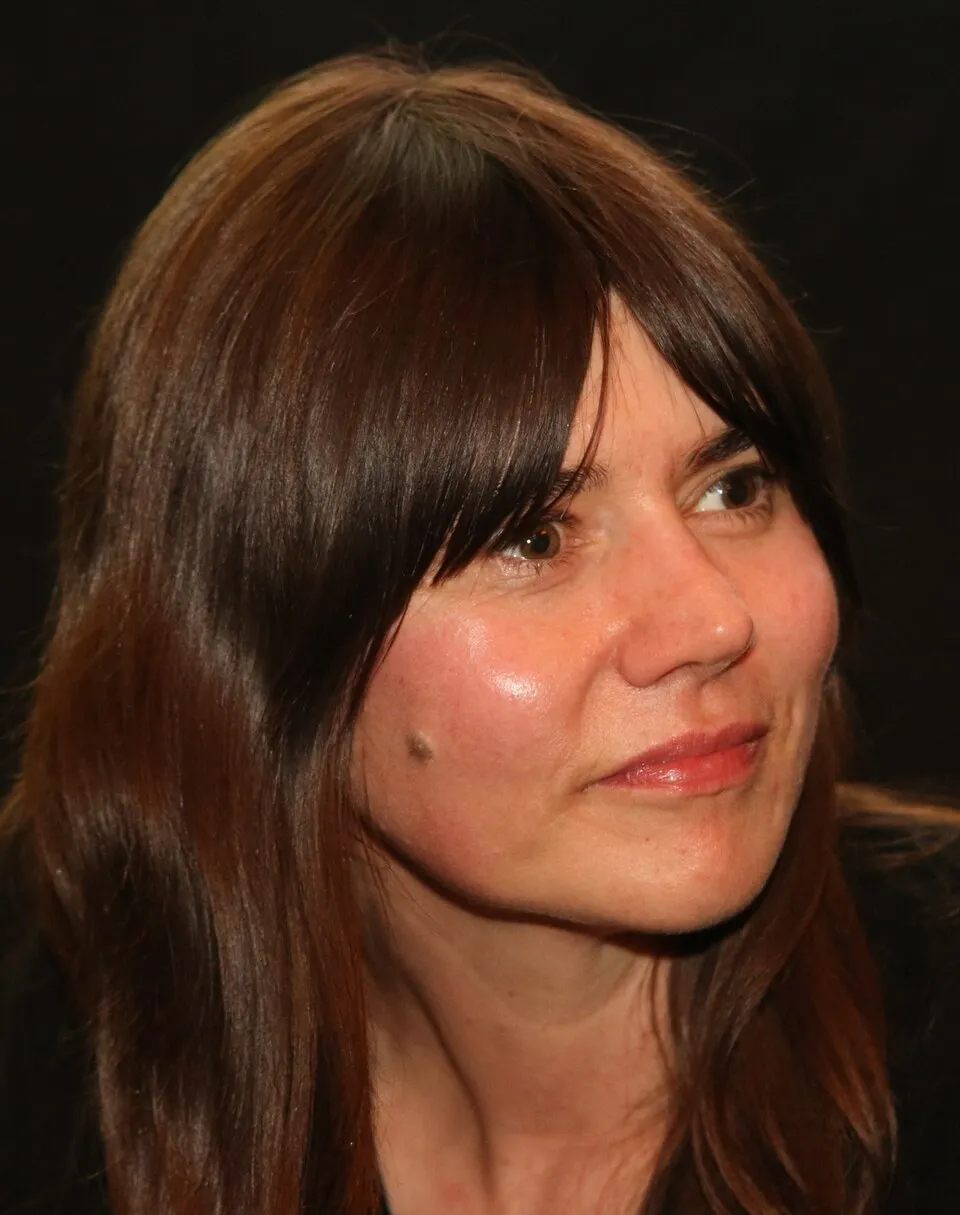 Photo: Oliver Abels, CC BY-SA 3.0, Wikimedia Commons
10. Małgorzata Szumowska
For Małgorzata Szumowska, 2024 was the year of the Polish release of “Kobieta z…” (Woman Of…), the film she made together with Michał Englert. Previously shown in the main competition of the Venice festival, it opened in Polish cinemas on 5 April 2024, distributed by Next Film, and in October it also reached Swedish screens. In September the film competed in the main competition of the 49th Gdynia Polish Film Festival.
“Kobieta z…” is the story of Aniela, told over 45 years, who – as a husband and father in a small town – struggles with gender dysphoria. Małgorzata Hajewska-Krzysztofik’s performance later earned her an Eagle nomination for Best Actress.
Szumowska and Englert have for years formed one of the most important duos in Polish cinema: he has been the cinematographer and co-writer on many of her films, and together they co-directed films including “Śniegu już nigdy nie będzie” (Never Gonna Snow Again, 2020). Szumowska won the Silver Bear for Best Director for “Body/Ciało” (Body) at the 2015 Berlinale.
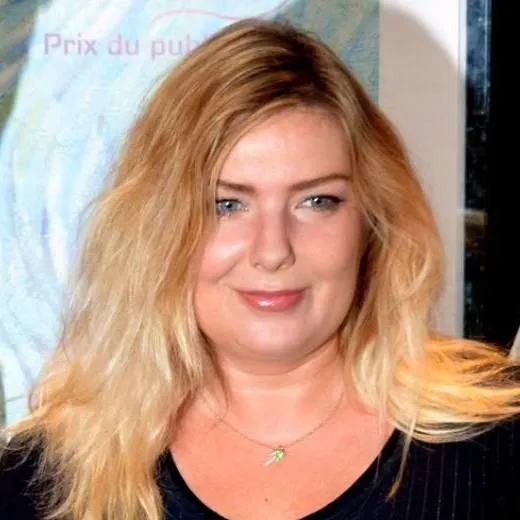 Photo: Georges Biard, CC BY-SA 3.0, Wikimedia Commons
9. DK Welchman
In 2024 Dorota Kobiela-Welchman (DK Welchman) and Hugh Welchman enjoyed the success of “Chłopi” (The Peasants) beyond cinemas. On 4 March 2024, at the 26th Polish Film Awards “Eagles”, the film received the Audience Award, chosen by a public vote, and Łukasz “L.U.C.” Rostkowski received the Eagle for music. “Chłopi” was also nominated for Best Film, and Kamila Urzędowska, who played Jagna, was among the nominees for Discovery of the Year.
On 26 January 2024 the film went on limited release in the United States, following an earlier week-long qualifying run in New York and Los Angeles. The Polish adaptation of Reymont, hand-painted in its entirety by a team of painters, thus became one of the most widely shown Polish films of the season abroad.
Kobiela-Welchman, a director and painter, had previously made “Twój Vincent” (Loving Vincent, 2017) with her husband; it was nominated for the Oscar for Best Animated Feature.
8. Grzegorz Dębowski
On 4 March 2024 Grzegorz Dębowski received the Eagle for Discovery of the Year for directing “Tyle co nic” (Next to Nothing). His debut was also nominated for the Polish Film Awards for Best Director and Best Screenplay – in those categories Dębowski competed with the makers of “Kos”, “Zielona granica”, “Doppelgänger” and “Filip”. He thus confirmed the position he had won a few months earlier in Gdynia, where the film received awards including those for screenplay and directing debut. In the Discovery of the Year category he beat, among others, two of the makers of “Chłopi”: composer Łukasz “L.U.C.” Rostkowski and actress Kamila Urzędowska.
“Tyle co nic” follows the investigation into the murder of one of the farmers protesting against an MP who ignored the countryside’s demands. The film stood out for its stark realism and the performance of the debutant Artur Paczesny.
Dębowski is a graduate of the Directing Department of the Łódź Film School. He was an assistant director on Paweł Pawlikowski’s “Ida” and also directed episodes of the TV series “Barwy szczęścia”.
7. Maria Zbąska
Maria Zbąska was the biggest surprise of the 49th Gdynia Polish Film Festival. Her feature debut “To nie mój film” (It’s Not My Film), which she directed, shot and co-wrote (with Kazimierz Zbąski), received the Andrzej Żuławski Golden Claw. It is the story of a married couple who, in a last attempt to save their relationship, set off on a 400-kilometre winter trek along the Baltic coast. The lead roles were played by Zofia Chabiera and Marcin Sztabiński.
The film quickly began travelling the festival circuit. On 10 November 2024, at the closing gala of the 65th Thessaloniki festival, it received the award of the SMART7 competition, given by an international youth jury; the jury called it “a moving combination of romantic comedy and survival cinema”.
Zbąska is a graduate of the Cinematography Department of the Łódź Film School. She previously directed works including “Psubrat” (2013), which received a distinction in the Young Cinema Competition in Gdynia. A year later “To nie mój film” brought her the Eagle for Discovery of the Year.
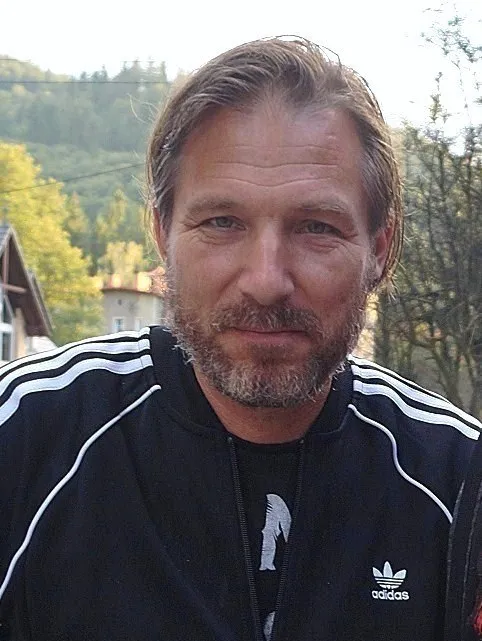 Photo: Ja Fryta, CC BY-SA 2.0, Wikimedia Commons
6. Xawery Żuławski
In 2024 Xawery Żuławski presented “Kulej. Dwie strony medalu” (Kulej. All That Glitters Isn’t Gold) – a biopic about Jerzy Kulej, two-time Olympic boxing champion. He co-wrote the screenplay with Rafał Lipski. Symbolically, the first screening took place on 2 August 2024 at the Polish House in Paris, during the Olympic Games, with the Polish Olympic team in attendance. The Polish premiere took place on 28 September at the 49th Gdynia Polish Film Festival, where the film received the award for make-up (Agnieszka Hodowana).
The film was shot in Kazimierz Dolny and in Łódź – all the boxing fights were filmed in the MOSiR sports hall. Part of the film was shot in black and white. The project was initiated by the boxer’s son, Waldemar Kulej, who proposed it to the producers at Watchout Studio.
Żuławski made his debut with “Chaos” (2006), and gained wide recognition with “Wojna polsko-ruska” (Snow White and Russian Red, 2009), based on Dorota Masłowska’s novel. He also directed the HBO series “Odwilż” (The Thaw). A year later “Kulej” brought him the Audience Award at the Eagles.
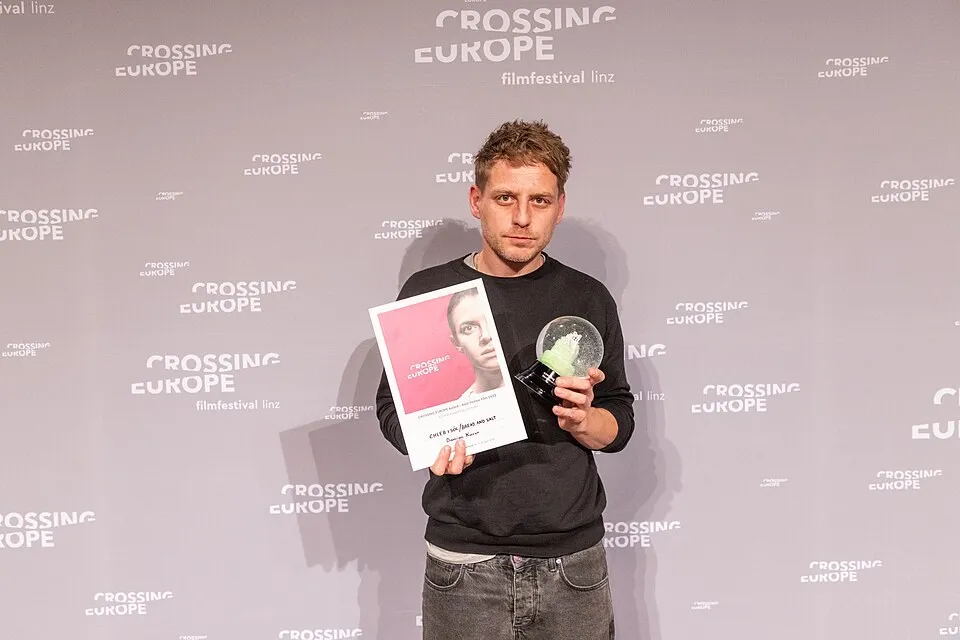 Photo: Crossing Europe Filmfestival Linz, CC BY 2.0, Wikimedia Commons
5. Damian Kocur
In 2024 Damian Kocur proved that the success of his debut was no accident. His second film, “Pod wulkanem” (Under the Volcano), co-written with Marta Konarzewska, had its world premiere on 8 September 2024 at the Toronto festival. A few weeks later it opened the 49th Gdynia Polish Film Festival, where newcomer Sofiia Berezovska received the award for a professional acting debut.
The film centres on a Ukrainian family on holiday in Tenerife when Russia invades Ukraine in February 2022. Overnight, returning home becomes impossible and the tourists become refugees. Critics wrote of “a war film without the war”, praising Nikita Kuzmenko’s cinematography.
“Pod wulkanem” was chosen as Poland’s submission for the Oscar for Best International Feature Film; however, it did not make the shortlist of 15 titles. The film was also shown at festivals including London and Thessaloniki.
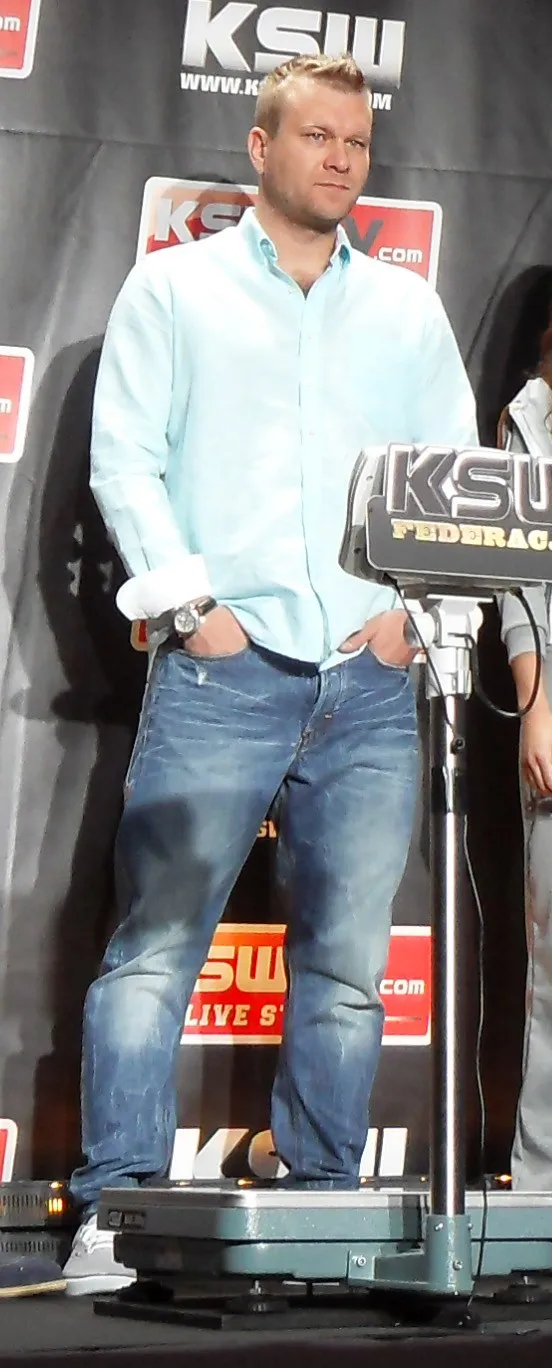 Photo: Artur Andrzej, CC BY-SA 3.0, Wikimedia Commons
4. Maciej Kawulski
Maciej Kawulski made the biggest box-office hit of 2024 in Polish cinemas. “Akademia pana Kleksa” (Kleks Academy), a loose adaptation of Jan Brzechwa’s book, had its gala premiere on 20 December 2023 in Katowice and went on general release on 5 January 2024. Preview screenings drew 437,000 viewers and the opening weekend another 400,000 – the best start for a Polish film since 2020.
By September 2024 the audience had passed 2.9 million and the takings USD 15 million, among the best results in Poland since 1989. Tomasz Kot played Ambroży Kleks. Critics were cooler about the film than audiences, though they praised its production design and costumes.
Kawulski, co-founder of the KSW federation, entered cinema as the director of “Jak zostałem gangsterem. Historia prawdziwa” (How I Became a Gangster, 2019) and “Jak pokochałam gangstera” (How I Fell in Love with a Gangster, 2022).
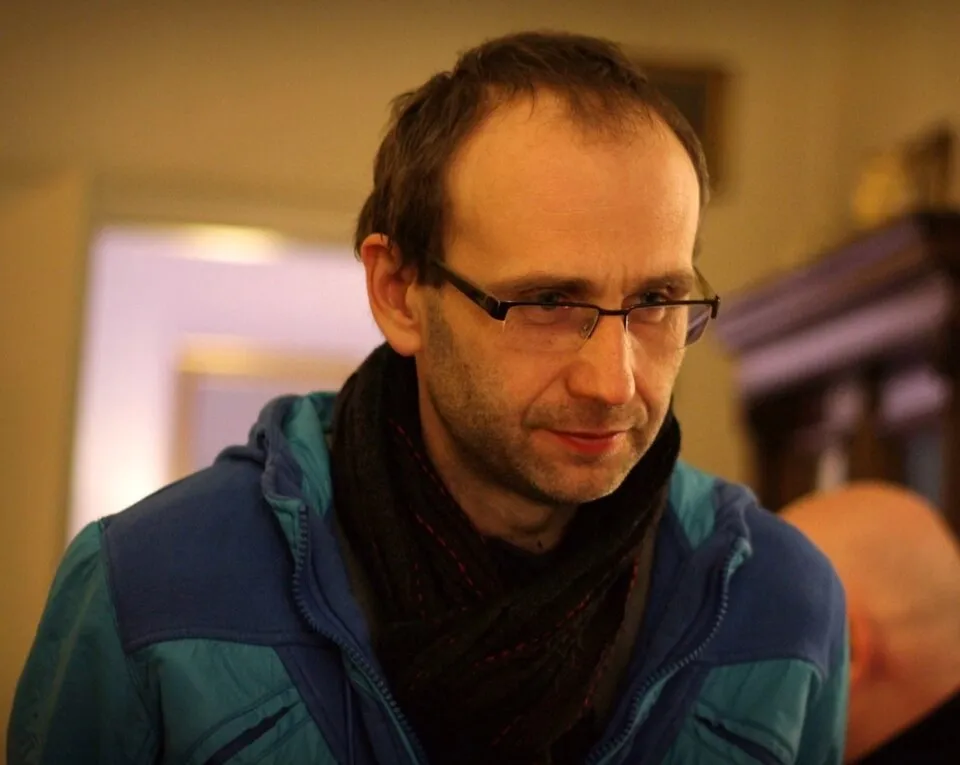 Photo: Franek Vetulani, CC BY-SA 4.0, Wikimedia Commons
3. Marcin Koszałka
Marcin Koszałka received the directing award at the 49th Gdynia Polish Film Festival for “Biała odwaga” (White Courage). The film also won awards there for screenplay (Koszałka and Łukasz M. Maciejewski), Best Actress (Sandra Drzymalska) and Best Supporting Actor (Julian Świeżewski). The cinema release took place on 8 March 2024.
The story is set in the Podhale region against the background of the “Goralenvolk” campaign. Two brothers, Jędrek (Filip Pławiak) and Maciek (Julian Świeżewski), end up on opposite sides: one chooses to collaborate with the Third Reich, the other leads the resistance. The film was shot in the Tatra Mountains, Zakopane and Kraków. It was praised for its acting and cinematography, although some reservations were also raised about its historical accuracy.
Koszałka is above all a respected cinematographer and documentary maker; he made his feature debut with “Czerwony pająk” (The Red Spider, 2015). “Biała odwaga” is his most widely awarded feature film – in 2025 it brought Eagles to Filip Pławiak and Julian Świeżewski.
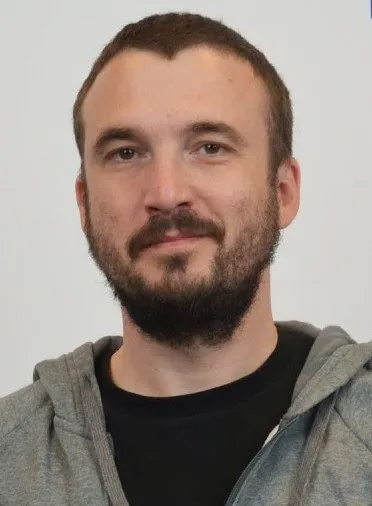 Photo: Polskie Radio RDC, CC BY 3.0, Wikimedia Commons
2. Paweł Maślona
Paweł Maślona turned his Golden Lions from Gdynia into box-office success and Academy awards. “Kos” opened in cinemas on 26 January 2024 and by 11 February had been seen by more than 190,000 viewers. On 4 March 2024, at the 26th Polish Film Awards “Eagles”, the film won six statuettes from sixteen nominations. Maślona received the Eagle for Best Director and Michał A. Zieliński for Best Screenplay. The film was also recognised for Dorota Roqueplo’s costumes, among other things.
“Kos” is a “Kościuszko western”: a story about the events leading up to the 1794 Insurrection, in which the fate of Tadeusz Kościuszko (Jacek Braciak) becomes entwined with that of Ignac (Bartosz Bielenia), the illegitimate son of a nobleman. In it, the filmmakers take issue with the Sarmatian myth and compare the lot of Polish peasants with that of enslaved Africans. On 26 April the film arrived on a video-on-demand service.
Maślona, who also works as an editor, made his debut in 2017 with “Atak paniki” (Panic Attack).
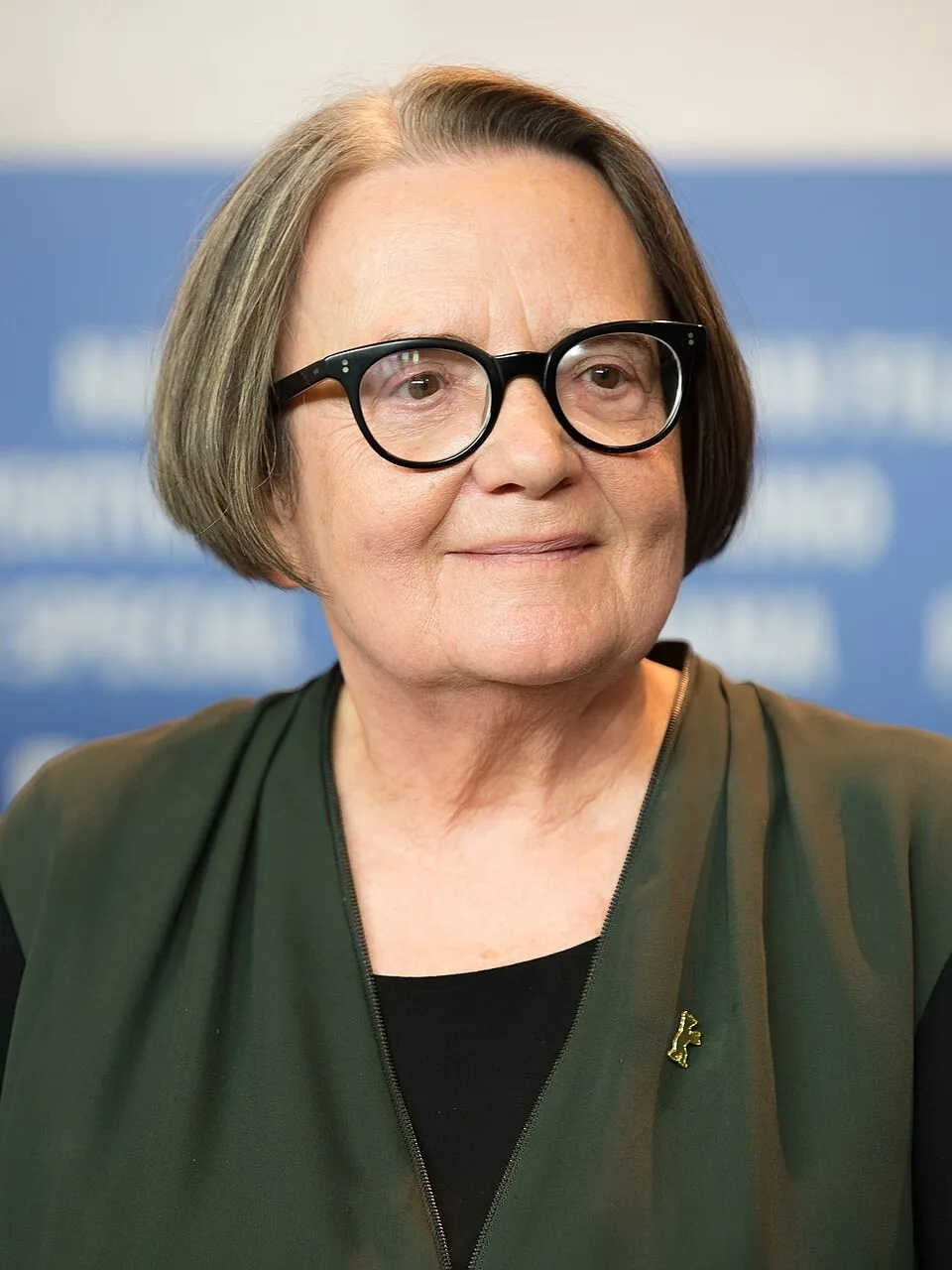 Photo: Martin Kraft, CC BY-SA 3.0, Wikimedia Commons
1. Agnieszka Holland
In 2024 Agnieszka Holland collected the most important Polish awards. On 29 February 2024 the Polish Film Academy gave her the Lifetime Achievement Eagle, and a few days later, at the ceremony on 4 March, “Zielona granica” received the Eagle for Best Film of the year.
In September the film, which had not been entered in the Gdynia competition a year earlier, competed in the main competition of the 49th Gdynia Polish Film Festival. It won the Golden Lions, the Audience Award and the sound award for Roman Dymny. For a film that had been the subject of a heated public debate in 2023, this was a clear gesture of recognition from the industry and from audiences.
At the same time Holland was working on her next project: in spring 2024 filming was under way in Prague and Berlin on “Franz Kafka” (Franz), a biopic about the author of “The Trial”. The director, a three-time Oscar nominee, was the most highly honoured Polish filmmaker of 2024.
Sources: Gdynia Film Festival – 2024 winners, Polish Film Academy, 26th Polish Film Awards “Eagles” (Wikipedia), “Under the Volcano” (Wikipedia), Transilvania IFF – SMART7 for “It’s Not My Film”
Photos: Małgorzata Szumowska – Oliver Abels, CC BY-SA 3.0, Wikimedia Commons; DK Welchman – Georges Biard, CC BY-SA 3.0, Wikimedia Commons; Xawery Żuławski – Ja Fryta, CC BY-SA 2.0, Wikimedia Commons; Damian Kocur – Crossing Europe Filmfestival Linz, CC BY 2.0, Wikimedia Commons; Maciej Kawulski – Artur Andrzej, CC BY-SA 3.0, Wikimedia Commons; Marcin Koszałka – Franek Vetulani, CC BY-SA 4.0, Wikimedia Commons; Paweł Maślona – Polskie Radio RDC, CC BY 3.0, Wikimedia Commons; Agnieszka Holland – Martin Kraft, CC BY-SA 3.0, Wikimedia Commons.
FAQ
Frequently asked questions
01How was the 2024 directors ranking compiled?
This is an editorial ranking. We took into account the Polish Film Awards “Eagles” presented in March 2024, the awards of the 49th Gdynia Polish Film Festival, screenings and awards at international festivals, the Oscar submission and the box-office results of Polish films in 2024.
02Who won the Golden Lions in 2024?
The Golden Lions of the 49th Gdynia Polish Film Festival went to Agnieszka Holland’s “Zielona granica” (Green Border), which also won the Audience Award. The directing award went to Marcin Koszałka for “Biała odwaga” (White Courage), and the Golden Claw to Maria Zbąska for “To nie mój film” (It’s Not My Film).
03Which Polish film had the largest audience in 2024?
The most-watched Polish film in cinemas in 2024 was Maciej Kawulski’s “Akademia pana Kleksa” (Kleks Academy). The film went on general release on 5 January 2024 and by September had drawn more than 2.9 million viewers.