Top 10 Polish film directors of 2025
Polish film directors of 2025: Golden Lions for “Ministranci”, record audiences for “Dom dobry”, “Franz Kafka” in Toronto and Emi Buchwald’s debut.

In Polish cinema, 2025 belonged to several very different films: the brutal “Dom dobry” (Home Sweet Home), which drew a record audience in cinemas, the warm-hearted “Ministranci” (The Altar Boys), which won the anniversary festival in Gdynia, and the international “Franz Kafka” (Franz). Debut directors also made a strong entrance. Here are the ten directors, women and men, who left the strongest mark on the year.
How the ranking was compiled. This is an editorial selection, not the result of a vote. We took into account the Polish Film Awards “Eagles” (Orły) presented on 10 March 2025, the awards of the 50th Gdynia Polish Film Festival (the Golden Lions and individual awards), premieres and awards at international festivals in 2025, the Oscar submission, the box-office results of Polish films and the premieres involving each person. We left out Magnus von Horn, winner of the Eagles for Best Film and Best Director for “Dziewczyna z igłą” (The Girl with the Needle), because he is a Swedish director, even though he has worked in Poland for years.
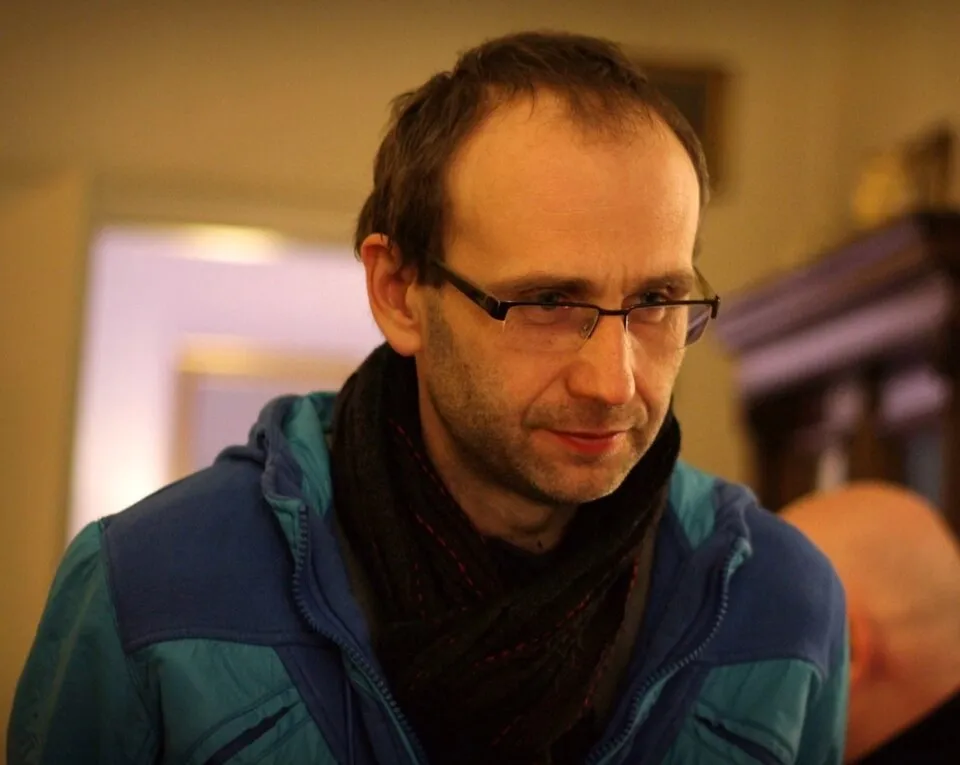 Photo: Franek Vetulani, CC BY-SA 4.0, Wikimedia Commons
10. Marcin Koszałka
Marcin Koszałka was one of the main figures of the 27th Polish Film Awards “Eagles”, held on 10 March 2025. “Biała odwaga” (White Courage) was nominated in the most important categories: Best Film, Best Director and Best Screenplay (Koszałka and Łukasz M. Maciejewski), as well as for the Audience Award. The statuettes went to the actors: Filip Pławiak for Best Actor and Julian Świeżewski for Best Supporting Actor.
The film, set in the Podhale region against the background of the “Goralenvolk” campaign, tells the story of two highlander brothers who end up on opposite sides in the face of collaboration with the Third Reich. Back in autumn 2024 Koszałka had already received the directing award for it in Gdynia. 2025 thus cemented the position of “Biała odwaga” as one of the most important Polish historical films of recent years.
Koszałka is a respected cinematographer and documentary maker, and as a feature director he made his debut with “Czerwony pająk” (The Red Spider, 2015).
9. Maciej Sobieszczański
In 2025 Maciej Sobieszczański presented “Brat” (Brother), a drama whose screenplay he co-wrote with Grzegorz Puda. The film competed in the main competition of the 50th Gdynia Polish Film Festival, where Filip Wiłkomirski received the award for a professional acting debut. In the autumn, at the Warsaw Film Festival, “Brat” won the Ecumenical Jury Award, and on 5 December 2025 it opened in cinemas.
The film opened the way to further honours for Sobieszczański: at the beginning of 2026 it received Eagle nominations including Best Film, Best Director and Best Screenplay, and the performances of Agnieszka Grochowska and Filip Wiłkomirski were also recognised with nominations.
Sobieszczański is a graduate of theatre studies at the Theatre Academy in Warsaw and teaches at the Łódź Film School and the Wajda School. He previously directed “Performer” (2015) and “Zgoda” (The Reconciliation, 2017) – for the latter he received an award in the First Look section of the Locarno festival and the directing award at the Montreal festival. “Brat” was the first of two of his films that attracted wide attention in 2025–2026.
8. Jakub Michalczuk
Jakub Michalczuk directed the second-biggest Polish box-office hit of 2025. “Teściowie 3” (In-Laws 3), a comedy written by Marek Modzelewski and produced by Michał Kwieciński at Akson Studio, premiered on 2 July 2025 at the Tofifest festival in Toruń and opened in cinemas on 12 September. The film drew around 1.5 million viewers – in 2025 only Wojciech Smarzowski’s “Dom dobry” did better. For the admissions, the filmmakers received the Diamond Ticket from the “Kina Polskie” (Polish Cinemas) Association.
The third instalment takes place at a christening in a provincial holiday resort, where two sets of in-laws meet again: the Wilks (Maja Ostaszewska, Marcin Dorociński) and the Chrapeks (Adam Woronowicz, Izabela Kuna). Izabela Kuna’s performance later earned her an Eagle nomination.
Michalczuk returned to the series after a break – he directed the first “Teściowie” (The In-Laws, 2021), while the second instalment was the work of Kalina Alabrudzińska.
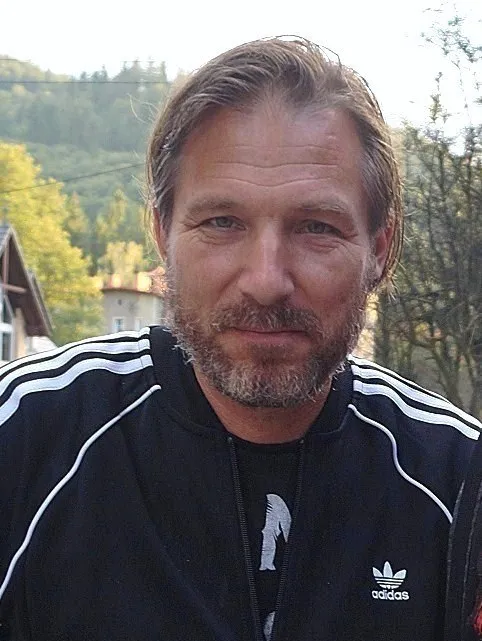 Photo: Ja Fryta, CC BY-SA 2.0, Wikimedia Commons
7. Xawery Żuławski
On 10 March 2025 Xawery Żuławski received the Eagle in the Audience Award category for “Kulej. Dwie strony medalu” (Kulej. All That Glitters Isn’t Gold). In the public vote, the film about Jerzy Kulej, two-time Olympic boxing champion, came ahead of Marcin Koszałka’s “Biała odwaga” and Magnus von Horn’s “Dziewczyna z igłą”. “Kulej” was also nominated for the Eagles for Best Film and for its screenplay, which Żuławski co-wrote with Rafał Lipski, and Michalina Olszańska for Best Actress.
The film had its first screening in August 2024 at the Polish House in Paris, during the Olympic Games, and in autumn 2024 it won the make-up award in Gdynia. Some scenes were shot in black and white, and the boxing fights were filmed in the MOSiR sports hall in Łódź.
Żuławski made his debut with “Chaos” (2006), and became known to a wide audience with “Wojna polsko-ruska” (Snow White and Russian Red, 2009), based on Dorota Masłowska’s novel. He also has the HBO series “Odwilż” (The Thaw) to his name.
6. Maria Zbąska
On 10 March 2025 Maria Zbąska received the Eagle for Discovery of the Year for directing “To nie mój film” (It’s Not My Film). Her debut was also nominated in the two most important categories of the Polish Film Awards: Best Film and Best Director – alongside titles including “Dziewczyna z igłą” and “Biała odwaga”. In the Discovery of the Year category Zbąska came ahead of Gabriela Muskała (“Błazny” (The Clowns)) and the composer Frederikke Hoffmeier.
In 2025 the film collected further awards in Poland: the Special Jury Prize of the Tarnów Film Award, the Journalists’ Award at the “Prowincjonalia” festival in Września, a distinction at the Lubuskie Film Summer in Łagów and the cinematography award at the Koszalin Debut Film Festival “Młodzi i Film”.
“To nie mój film” is the story of a couple who, in a last attempt to save their marriage, set off on a 400-kilometre winter trek along the Baltic. Zbąska, a graduate of the Cinematography Department of the Łódź Film School, shot the film herself and co-wrote the screenplay.
 Photo: Franek Vetulani, CC BY-SA 4.0, Wikimedia Commons
5. Jan Komasa
In 2025 Jan Komasa had two premieres of English-language films. On 5 September, in the Centrepiece section of the Toronto festival, he presented “Dobry chłopiec” (Good Boy), a British-Polish psychological thriller written by Bartek Bartosik and Naqqash Khalid. The producer, Jerzy Skolimowski, had offered him the project back in 2019. The film then went to the London festival and to Rome, where its lead actor, Anson Boon, received the award for best actor. The cast also includes Stephen Graham and Andrea Riseborough.
On 29 October 2025 “Anniversary” opened in American cinemas – a dystopian political thriller starring Diane Lane and Kyle Chandler about a family whose life changes with the rise of an authoritarian movement.
Komasa is one of the most recognisable Polish directors of his generation: “Boże Ciało” (Corpus Christi) was nominated for the Oscar for Best International Feature Film, and his earlier films include “Sala samobójców” (Suicide Room) and “Miasto 44” (Warsaw 44).
4. Emi Buchwald
Emi Buchwald was the discovery of the anniversary 50th Gdynia Polish Film Festival. Her feature debut “Nie ma duchów w mieszkaniu na Dobrej” (No Ghosts on Good Street) received the directing award, the Andrzej Żuławski Golden Claw and the Journalists’ Award, and Karolina Rzepa won the award for Best Supporting Actress. In the directing category the debutant beat established filmmakers such as Wojciech Smarzowski and Władysław Pasikowski.
The film tells the story of four siblings from Warsaw’s Powiśle district who are entering adulthood and trying to become independent without losing the bonds between them. Buchwald wrote the screenplay with Karol Marczak. Until the end of the year the film was shown in preview screenings at the Atlantic cinema in Warsaw.
In 2025 Buchwald also received the annual award of the Minister of Culture and National Heritage, and in November she was among the nominees for the Polityka Passports in the film category. Born in 1991, a graduate of the Directing Department of the Łódź Film School, she had previously attracted attention with short films, including “Piękna łąka kwietnia”.
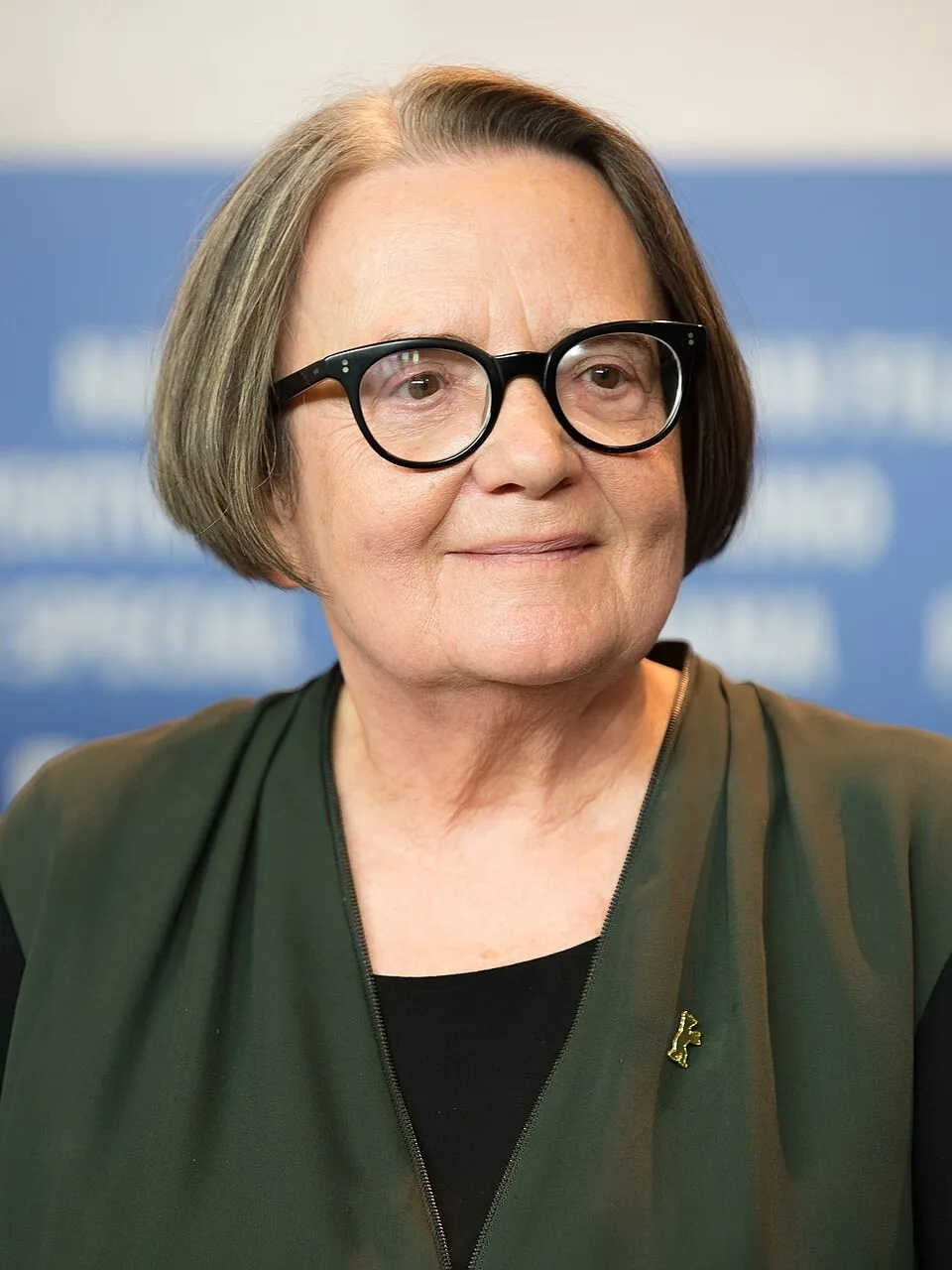 Photo: Martin Kraft, CC BY-SA 3.0, Wikimedia Commons
3. Agnieszka Holland
In 2025 Agnieszka Holland presented “Franz Kafka” (Franz) – a biopic about the writer, from his youth in his native Prague to his death in 1924. The world premiere took place on 5 September at the Toronto festival, and the film also competed for the Golden Shell in the main competition of the San Sebastián festival. The screenplay was written by Marek Epstein, and the film was shot mainly in Berlin and Prague.
At the 50th Gdynia Polish Film Festival the film received the Silver Lions and awards for cinematography (Tomasz Naumiuk), make-up and Best Actor for Idan Weiss, who plays Kafka. On 24 October it opened in Polish cinemas. The Polish Oscar Committee chose it as Poland’s submission for the Oscar for Best International Feature Film; in December it emerged that it had not made the shortlist. The film was included in the European Film Awards selection.
Holland, a three-time Oscar nominee, proved once again in 2025 that she can make European co-productions of the highest standard.
 Photo: Effie, CC BY-SA 4.0, Wikimedia Commons
2. Piotr Domalewski
Piotr Domalewski won the anniversary 50th Gdynia Polish Film Festival. “Ministranci” (The Altar Boys) won the Golden Lions, the screenplay award, the editing award (Agnieszka Glińska) and the Audience Award. In Gdynia the film also received several non-statutory awards, including the “Golden Claqueur” for the longest-applauded screening and the award of the Art House Cinemas Association.
It is a comedy-drama about four altar boys who, after discovering the theft of church money, decide to dispense justice and help those in need on their own. Reviewers praised its thoughtful approach to faith and to the institution of the Church. The film opened in cinemas on 21 November 2025 and by the end of the year had been seen by around 400,000 viewers.
Domalewski, who studied acting at the PWST drama school in Kraków and directing at the University of Silesia, had triumphed in Gdynia once before: his debut “Cicha noc” (Silent Night) won the Golden Lions in 2017 and five Eagles. He went on to make films including “Jak najdalej stąd” (I Never Cry) and “Hiacynt” (Operation Hyacinth).
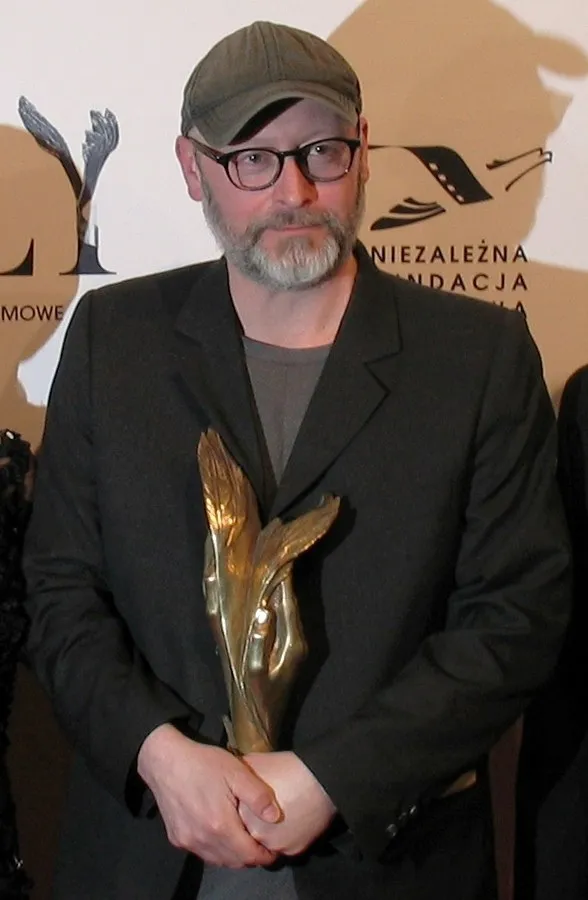 Photo: Artur Balana, CC BY-SA 3.0, Wikimedia Commons
1. Wojciech Smarzowski
Wojciech Smarzowski made the most talked-about Polish film of 2025. “Dom dobry” (Home Sweet Home) premiered on 22 September in the main competition of the 50th Gdynia Polish Film Festival, where it received the “Don Quixote” Award given by the Polish Federation of Film Societies. On 7 November the film opened in cinemas and, according to figures from 17 November, was seen by more than 1.2 million viewers within ten days. It became the biggest Polish box-office hit of the year.
Through the story of Gośka (Agata Turkot), who is humiliated and beaten by her husband (Tomasz Schuchardt), the film tells of domestic violence. It sparked a lively debate: critics valued its tackling of an important subject but argued about the way the violence is shown. The film was shot from January to April 2024 in locations including Warsaw, Pruszków and Serock, as well as in Venice.
Smarzowski has for years been one of the most watched and most frequently awarded Polish directors – his films include “Wesele” (The Wedding), “Róża” (Rose), “Wołyń” (Hatred) and “Kler” (Clergy). In March 2026 “Dom dobry” brought him the Eagles for Best Film and Best Director.
Sources: Gdynia Film Festival – 2025 winners, Polish Film Academy, 27th Polish Film Awards “Eagles” (Wikipedia), “Franz” (Wikipedia), Polityka Passports – Emi Buchwald (Łódź Film School)
Photos: Marcin Koszałka – Franek Vetulani, CC BY-SA 4.0, Wikimedia Commons; Xawery Żuławski – Ja Fryta, CC BY-SA 2.0, Wikimedia Commons; Jan Komasa – Franek Vetulani, CC BY-SA 4.0, Wikimedia Commons; Agnieszka Holland – Martin Kraft, CC BY-SA 3.0, Wikimedia Commons; Piotr Domalewski – Effie, CC BY-SA 4.0, Wikimedia Commons; Wojciech Smarzowski – Artur Balana, CC BY-SA 3.0, Wikimedia Commons.
FAQ
Frequently asked questions
01How was the 2025 directors ranking compiled?
This is an editorial ranking. We took into account the Polish Film Awards “Eagles” presented in March 2025, the awards of the anniversary 50th Gdynia Polish Film Festival, premieres at international festivals (including Toronto and San Sebastián), Poland’s Oscar submission and the box-office results of Polish films in cinemas in 2025.
02Who won the Golden Lions in 2025?
The Golden Lions of the 50th Gdynia Polish Film Festival went to Piotr Domalewski’s “Ministranci” (The Altar Boys), which also won the screenplay award and the Audience Award. The Silver Lions went to Agnieszka Holland’s “Franz Kafka” (Franz), and the directing award to Emi Buchwald for “Nie ma duchów w mieszkaniu na Dobrej” (No Ghosts on Good Street).
03Which Polish film had the largest audience in 2025?
The biggest Polish box-office hit of 2025 was Wojciech Smarzowski’s “Dom dobry” (Home Sweet Home), which passed 1.2 million viewers within ten days of its release. The second-best result belonged to Jakub Michalczuk’s “Teściowie 3” (In-Laws 3), with an audience of around 1.5 million.